
Free written scope consultation - allowances, timeline, and change-order rules on paper before a single trade is scheduled
Quikrete Home Additions & ADU: The Fort Lauderdale Owner’s Guide
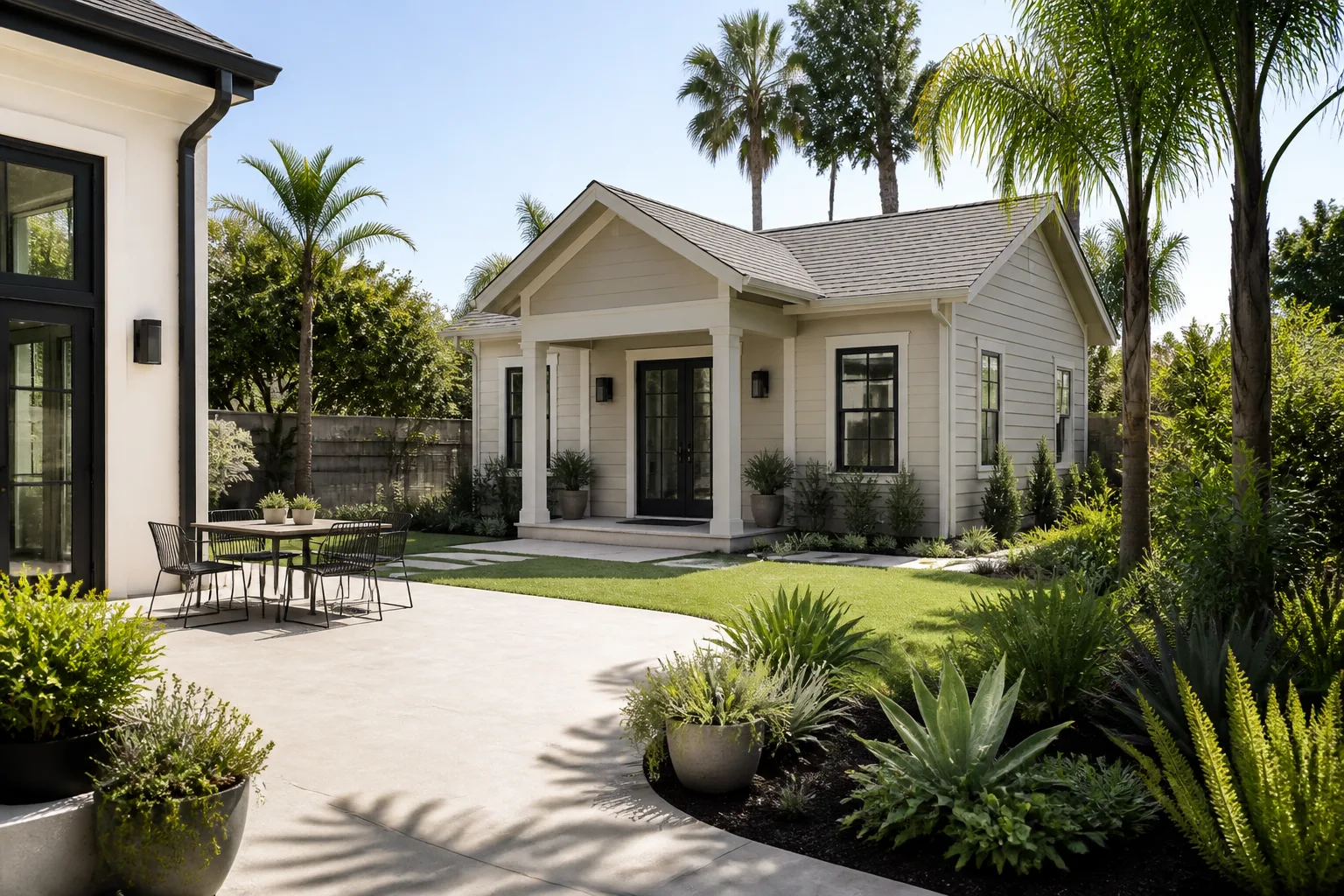
Quikrete-based home additions and ADU construction in Fort Lauderdale typically runs $45,000 – $130,000 for the full project, depending on square footage, foundation type, and whether you’re building up or out. We install and build with Quikrete products throughout the process, from structural footers to finish work, and we stock the common mixes, additives, and reinforcement materials on our trucks so projects don’t stall waiting on a supply run. Most Fort Lauderdale homeowners call us after a previous contractor either poured concrete that cracked within a season or framed an addition without accounting for our water table and humidity. The failed part isn’t always visible at first. Sometimes it’s a slab that settled, a stem wall that spalled, or a bond beam that wasn’t tied correctly. By the time it shows up as a door that won’t close or a crack running up a corner, the fix costs more than doing it right the first time.
We’re an independent Fort Lauderdale remodeling company. We are not affiliated with Quikrete, but we use their products daily and know how they behave in South Florida conditions.
Which Quikrete Models This Applies To
Quikrete doesn’t make a single “home addition” product. What you’re really dealing with is a system: the concrete or masonry components that form the addition’s base and envelope. The most common Quikrete products we specify for additions and ADUs in Fort Lauderdale are:
- Quikrete 5000 Concrete Mix – our default for footers, slabs, and stem walls where we need 5,000 PSI compressive strength. In Fort Lauderdale’s sandy soil and high water table, 3,000 PSI mix simply doesn’t hold up over time.
- Quikrete Crack-Resistant Concrete Mix – used for interior slabs and thinner pours where shrinkage cracking is the main risk. This mix has reinforcing fibers already blended in, which matters in a climate where concrete dries fast and unevenly.
- Quikrete Mortar Mix and Mason Mix – for block walls, brick veneers, and any masonry tie-in to the existing house.
- Quikrete Concrete Bonding Adhesive – the product that makes new concrete actually stick to old concrete. Skipping this step is exactly how you get a cold joint that lets water in and eventually separates.
- Quikrete Waterproofing Products – above-grade and below-grade waterproofing for foundation walls that sit below Fort Lauderdale’s seasonal water line.
The compatibility gotcha we see most often: homeowners or handymen buy the cheapest bagged mix at the big-box store, which is often 3,000 PSI or a general-purpose mix, and pour a structural element with it. For anything load-bearing in an addition or ADU, you want a minimum 4,000 PSI mix, and for footers under a two-story addition, 5,000 PSI is the safer call. The other common mistake is using mortar mix where concrete mix belongs. Mortar is not concrete. It’s designed to bond masonry units, not to carry structural loads. If someone poured a footing with mortar, it will crumble under load, and the only fix is demolition and repour.
Aftermarket and generic equivalents do exist, but with concrete the “part” is the mix design itself. We stock Quikrete bags because their blends are consistent bag to bag, which matters when we’re pouring a 20-yard footer and every bag has to perform identically. That consistency is part of why Trevor Nash puts the Quikrete 5000 spec in writing on our proposals. You should know exactly what’s going into the ground before we pour.
Styles & brands we work with







Signs Your Quikrete Home Additions & ADU Is Failing
- Cracks wider than 1/8 inch running through the slab or stem wall. Hairline cracks are normal as concrete cures. Cracks you can fit a dime into mean the slab is moving, the sub-base wasn’t compacted, or the mix was too wet when poured.
- Efflorescence (white chalky residue) on block or concrete walls. This means water is moving through the masonry and carrying minerals to the surface. In Fort Lauderdale, it usually signals missing or failed waterproofing on the below-grade portion of the wall.
- Spalling or flaking concrete surfaces. The top layer of concrete is separating, typically from either a too-wet mix, over-finishing the surface, or salt exposure. Near the coast, airborne salt accelerates spalling on any exterior concrete that wasn’t properly sealed.
- Rust stains or exposed rebar in the concrete. Once rebar is exposed to humid, salt-laden air, it rusts and expands, which cracks the surrounding concrete from the inside. This is a structural problem, not a cosmetic one.
- Doors and windows that suddenly stick or won’t latch in the addition. The addition is settling unevenly, which usually traces back to undersized footers or poorly compacted fill under the slab. In sandy Fort Lauderdale soil, adequate footer depth and compaction are not optional.
Replacement Cost & What’s Included
Full home additions in Fort Lauderdale run $45,000 – $130,000, and ADU construction runs $90,000 – $220,000. Those are complete project numbers, not just the concrete line item. When we’re fixing a failed Quikrete-related component inside an addition, here’s what the line items look like:
| Repair Scope | Typical Fort Lauderdale Price Range |
|---|---|
| Slab crack repair (epoxy injection, non-structural) | $600 – $2,000 |
| Partial slab replacement (small area, up to 200 sq ft) | $2,500 – $6,500 |
| Stem wall repair / reinforcement | $3,000 – $9,000 |
| Full footer or slab repour for a room addition | $8,000 – $25,000 |
| Below-grade waterproofing of existing foundation walls | $4,000 – $12,000 |
What drives the range: access (can we get equipment to the site, or are we hand-mixing in a tight backyard?), the condition of the existing structure, and whether the original pour failed because of bad sub-base, bad mix, or bad drainage. If the drainage around the addition wasn’t graded correctly, we fix that first or the new concrete fails the same way. Every repair we do includes a written price before we start, and the 365-Day Done Right Promise covers the repair in writing. If it fails within the year, we come back and fix it at no charge.
See the difference
 Before
 After
After Before
 After
After Before
 After
AfterDIY or Call Us?
For a failing foundation, slab, or structural concrete element, I’ll be direct: do not attempt this as a DIY repair. This is load-bearing work, and the danger isn’t just the repair failing later – it’s the structure losing support while you’re working inside it. Cracked footers, spalling stem walls, and exposed rebar are the kinds of problems where a YouTube video and a bag of patch mix make things worse, not better, and I’ve torn out enough “patched” concrete in Fort Lauderdale to say that with confidence.
What you can safely do as an owner: identify the symptoms, photograph them over a few weeks to track whether cracks are growing, and check your drainage and gutters to confirm water isn’t pooling against the addition. That information helps us give you an accurate diagnosis and an honest number faster. If you’re seeing any of the failure signs above, call us at (754) 551-2922 for a free estimate. Tell me what you need, I’ll tell you what it costs – then we’ll get it done.
FAQs
A properly mixed, poured, and cured concrete foundation or slab in Fort Lauderdale should last 50 years or more, with the caveat that our salt air, humidity, and sandy soil mean the sub-base and waterproofing matter as much as the mix itself. We’ve seen 60-year-old slabs in decent condition, and we’ve seen 8-year-old slabs that look like a dropped cracker because the sub-base was never compacted. The single biggest factor in lifespan is footer depth and drainage, not just bag quality.
It depends on the crack’s width, location, and whether the slab is still moving. Hairline, non-structural cracks can be repaired with epoxy injection for $600 – $2,000 depending on the linear footage. Cracks wider than 1/8 inch in a load-bearing area, or cracks that are still growing, usually point to a sub-base or footer failure underneath, and patching the surface just buys you time. Call (754) 551-2922 and we’ll tell you honestly which situation you’re in.
Small crack injections and partial slab repairs are typically done in one to three days, including surface prep, material cure time, and cleanup. A full footer or slab repour is a bigger project that runs one to two weeks from demolition through pour and initial cure. We give you a written schedule before we start, and we show up in the window we gave you.
Yes. Our Fort Lauderdale crews run with Quikrete 5000, crack-resistant mix, bonding adhesive, and waterproofing products on the truck for every addition or ADU job. That means small pours and repairs don’t wait on a supply run, and larger pours are provisioned ahead of time so the material quality on day one is the same as it is on day ten.
Call Penhallow Remodeling Fort Lauderdale
If you have a Quikrete home addition or ADU showing signs of trouble in Fort Lauderdale, call us at (754) 551-2922 for a free estimate. We’ll come out, look at the concrete, the drainage, and the structure, and give you a written price before any work starts. We also install KraftMaid and Wellborn cabinetry, Cambria and Silestone countertops, and we stand behind every project with the 365-Day Done Right Promise in writing. A live person answers the phone 24/7, and every technician who arrives at your door is background-checked and in uniform. No voicemail maze, no low-ball number that climbs after the walls are open. Just a straight answer and a fair price.
Written by Trevor Nash, Owner, Penhallow Remodeling Fort Lauderdale at Penhallow Remodeling Fort Lauderdale, serving Fort Lauderdale and nearby areas.


