
Last updated October 15, 2026

Free written scope consultation - allowances, timeline, and change-order rules on paper before a single trade is scheduled
Construction Cost Breakdown: The Fort Lauderdale Homeowner’s Reference for 2026
Most national remodeling cost guides are built on numbers that fall apart the moment you cross into Broward County. The average kitchen remodel figure you’ll find online assumes a labor market where a licensed carpenter earns $28 an hour. In Fort Lauderdale right now, that same carpenter is billing closer to $45, and that $17 gap compounds across every trade on the job: electrician, plumber, tile setter, drywall finisher. This guide gives you the real 2026 numbers for Fort Lauderdale, broken out by material and labor, including the hurricane-compliance premium and the permit line items most homeowners never see until the final invoice. By the end, you’ll know how to read a bid like a contractor reads it, and how to spot the gaps before you sign.
Styles & brands we work with







Quick Answer
Construction and remodeling costs in Fort Lauderdale in 2026 run 15 – 30% above national averages on the low end, driven by Broward County’s labor market, hurricane-rated material requirements, and permit fees that add 3 – 7% to total project cost. A mid-range kitchen remodel runs $25,000 – $55,000, a primary bathroom $14,000 – $32,000, and a secondary bathroom $9,000 – $18,000. Impact-rated windows and doors add a 25 – 50% premium over non-rated equivalents, and that premium is legally required for most replacement work in the county.
Table of Contents
- Why Fort Lauderdale Labor Rates Reset the Whole Pricing Conversation
- The 2026 Kitchen Remodel: Line-Item Ranges That Actually Hold Up
- Primary vs. Secondary Bathroom: Two Different Budgets
- The Hurricane-Compliance Premium: What You’re Actually Paying For
- Permits, Impact Fees, and Inspections: The Line Item Nobody Mentions
- How to Read a Written Bid: Allowances, Contingencies, and Red Flags
- Licensed and Insured vs. Unlicensed: The Dollar Cost of Cutting Corners
- Common Mistakes to Avoid
- When to Call a Professional
- Frequently Asked Questions
- The Bottom Line
Why Fort Lauderdale Labor Rates Reset the Whole Pricing Conversation
Labor is the single largest cost driver in any remodel, and Fort Lauderdale’s labor market doesn’t behave like the rest of the country. Broward County has sustained high demand for licensed trades since the post-2021 construction boom, and the supply of qualified electricians, plumbers, and carpenters hasn’t caught up. The result is a wage floor that has national cost guides using outdated math.
Here’s what that looks like in practice, comparing the national averages most guides cite against what we see on current Fort Lauderdale projects:
| Trade | National Guide Hourly Rate | Fort Lauderdale 2026 Reality |
|---|---|---|
| Licensed Carpenter | $28 – $35 | $42 – $58 |
| Licensed Electrician | $50 – $70 | $75 – $110 |
| Licensed Plumber | $45 – $65 | $70 – $105 |
| Tile Setter | $30 – $45 | $45 – $70 |
| Drywall Finisher | $25 – $35 | $38 – $55 |
What does that gap mean for a full kitchen remodel? If your job involves 400 total labor hours across all trades, the difference between national guide math and Fort Lauderdale reality is $6,800 to $13,000, before you even touch materials. That’s before cabinets, countertops, flooring, fixtures, and the hurricane-rated windows a Broward County inspector will expect to see on your permit drawings.
Understanding this is the first step toward reading a bid accurately. When a contractor in Fort Lauderdale hands you a written estimate that looks high compared to a website you found at 2 a.m., the website is probably right, for a labor market 1,200 miles away. The question isn’t whether the number is higher than the internet said. The question is whether the number is complete, itemized, and held steady from day one to final invoice. That’s where the written price matters more than the sticker number itself.
If you’re working with a full-scope remodel, you can work with a General Contractor in Fort Lauderdale who carries the labor and permit burden for you. The alternative, where you act as your own general contractor and hire each trade separately, saves the general contractor’s markup, typically 10 – 20%, but it shifts the scheduling, sequencing, permit, and warranty burden onto you. Most homeowners who’ve been through one remodel decide the markup is a fair trade for a single point of accountability.
The 2026 Kitchen Remodel: Line-Item Ranges That Actually Hold Up
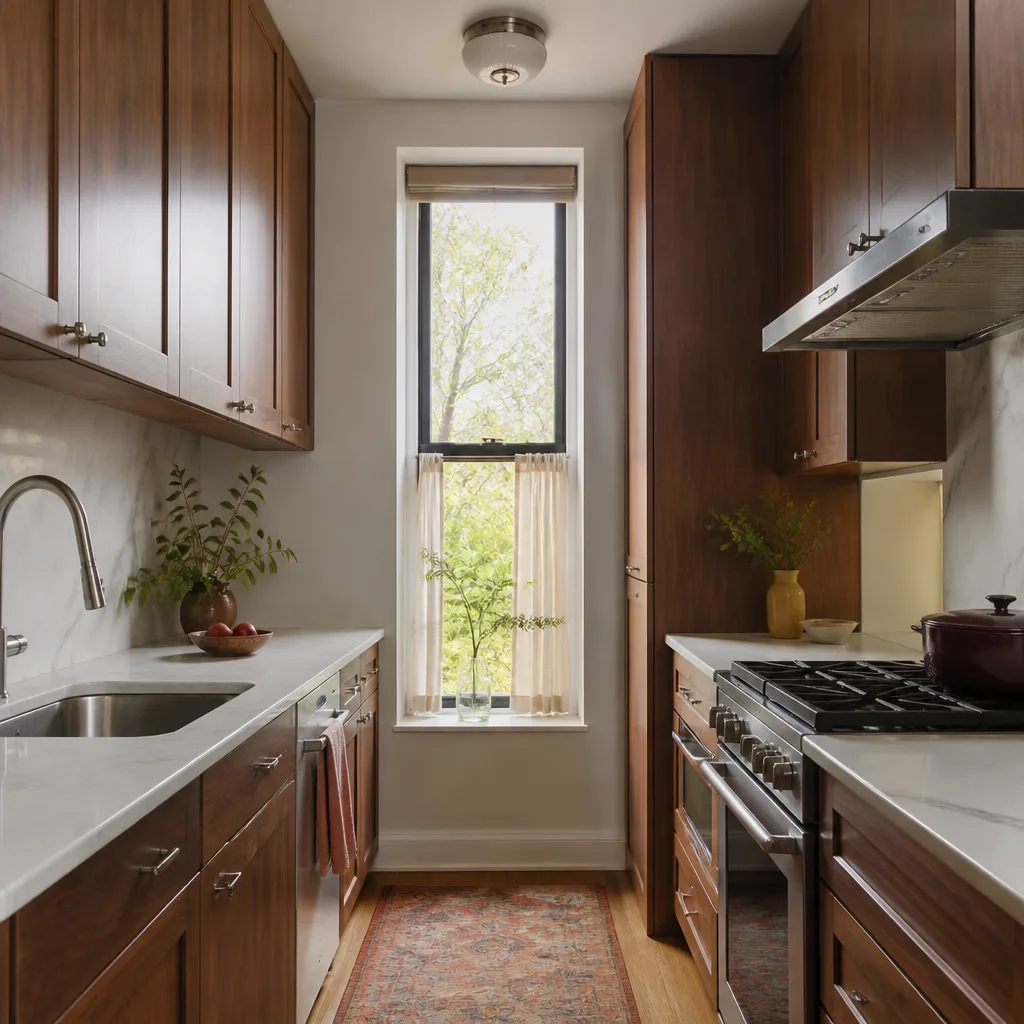
A kitchen remodel in Fort Lauderdale in 2026 runs $25,000 – $55,000 for a mid-range job and $60,000 – $120,000 for an upscale one. The range is wide because two factors, cabinet line and countertop material, by themselves swing the budget by $15,000 or more. Layout changes add structural work, moving plumbing or gas lines adds thousands, and an older Fort Lauderdale home built before the 1990s frequently hides surprises behind the walls: corroded cast-iron drain lines, undersized electrical panels, or termite damage along exterior walls.
Here’s a realistic line-item breakdown for a 200-square-foot Fort Lauderdale kitchen with mid-range finishes, no layout change:
- Demolition and disposal: $1,800 – $3,200
- Rough carpentry and drywall repair: $2,500 – $4,500
- Electrical (new circuits, under-cabinet lighting, GFCI upgrades): $2,800 – $5,500
- Plumbing (supply lines, drain reconfiguration): $1,500 – $4,000
- Cabinetry (mid-range line, such as Wellborn): $8,000 – $18,000 installed
- Countertops (Cambria or Silestone quartz): $3,500 – $7,500 installed
- Backsplash tile and labor: $1,200 – $2,800
- Flooring (porcelain tile or luxury vinyl plank): $2,000 – $5,000
- Fixtures, sink, faucet (Kohler or Moen): $900 – $2,200
- Paint and finish work: $1,200 – $2,500
- Permits and inspections (Broward County): $800 – $2,000
The takeaway: labor and general contracting operations represent about 45 – 55% of a typical Fort Lauderdale kitchen remodel, materials 35 – 45%, and permits 3 – 7%. Cabinets are usually the largest single material line item, which is why we install Wellborn cabinetry as our mid-range line: the maple and birch construction holds up in Florida’s humidity better than particleboard boxes, and the factory finish means less on-site painting, which means a cleaner, faster install.
Countertop choice is the second big lever. Cambria quartz carries a transferable lifetime warranty against manufacturing defects, which sits alongside our own 365-Day Done Right Promise. Silestone offers a similar warranty structure at a slightly lower entry price. Caesarstone is a third solid option. None of them are cheap, but in a coastal climate where laminate edges peel and natural stone needs sealing every year, quartz is the material that holds its value and its finish in Fort Lauderdale’s salt-laden air.
For a deeper dive on what drives kitchen pricing in this market, see our guide on Kitchen Remodeling in Fort Lauderdale.
Primary vs. Secondary Bathroom: Two Different Budgets
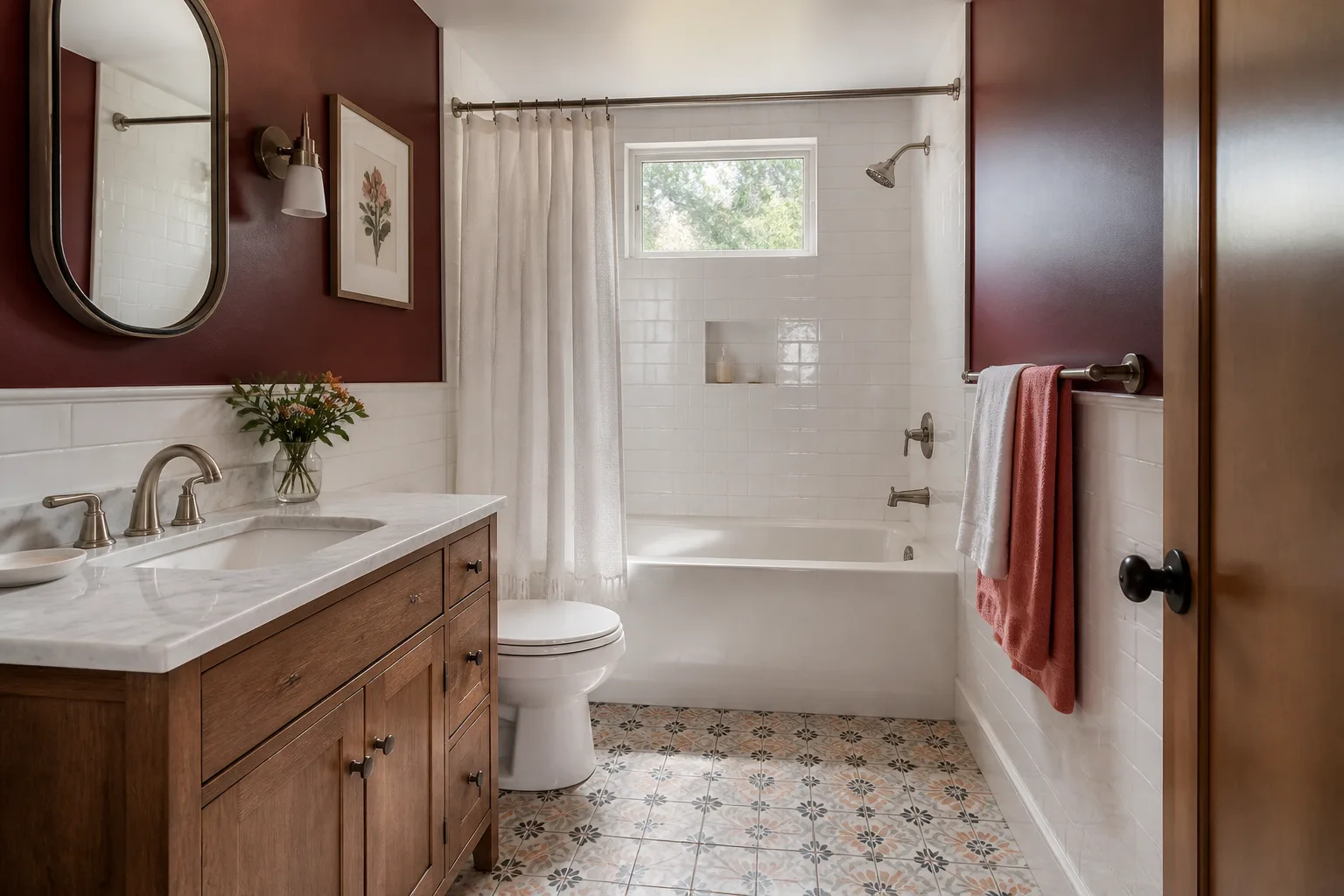
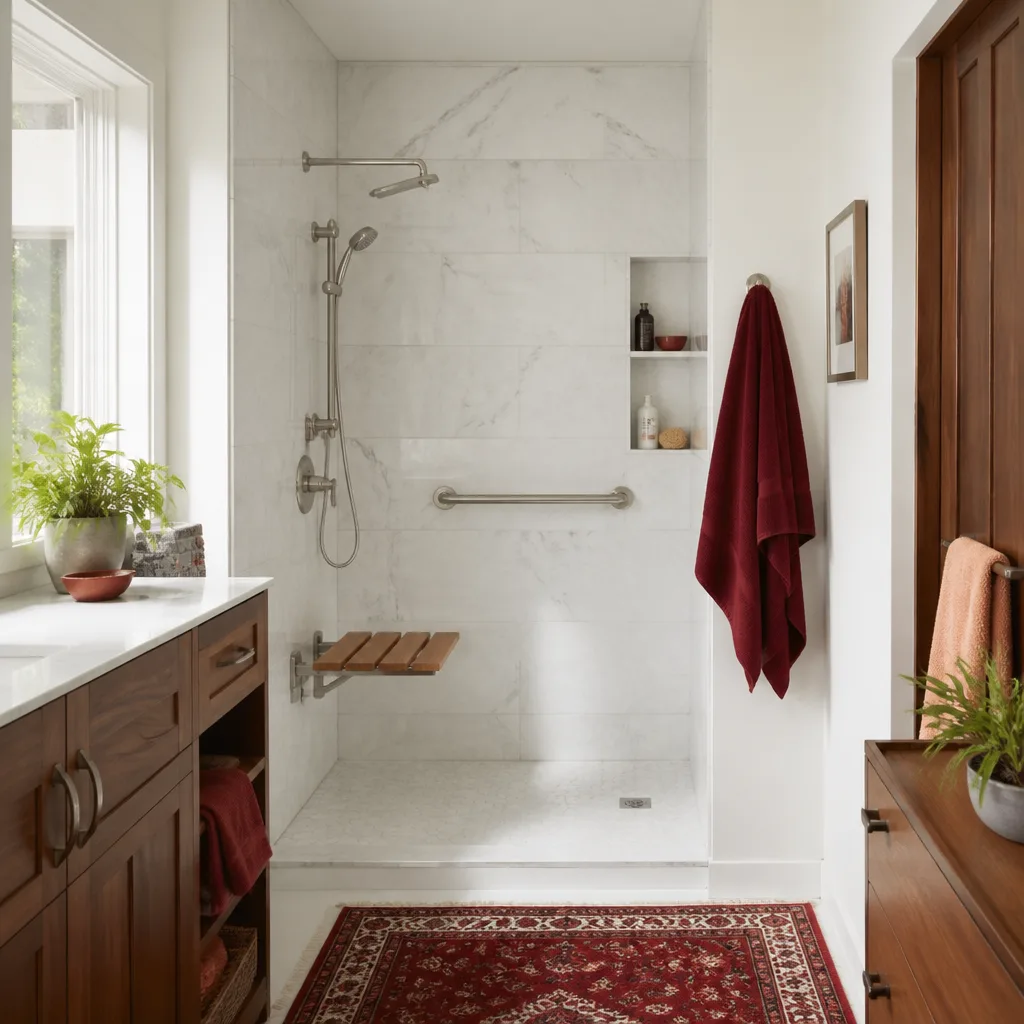
Bathroom remodeling costs in Fort Lauderdale split into two distinct tiers. A primary bathroom, with a larger footprint, double vanity, walk-in shower or tub, and often a water closet, runs $14,000 – $32,000 in 2026. A secondary or hall bathroom, typically 40 – 60 square feet with a tub-shower combination, runs $9,000 – $18,000. The difference is driven by square footage, fixture count, tile square footage, and the plumbing work required when you move or expand a shower drain.
Here’s a practical comparison:
| Line Item | Primary Bathroom | Secondary Bathroom |
|---|---|---|
| Demolition | $1,500 – $2,800 | $900 – $1,800 |
| Plumbing rough-in and finish | $3,500 – $7,000 | $1,800 – $4,000 |
| Electrical (lighting, exhaust fan, GFCI) | $1,800 – $3,500 | $900 – $1,800 |
| Tile (shower walls, floor) | $3,000 – $7,500 | $1,500 – $3,500 |
| Vanity and countertop | $2,500 – $6,000 | $1,200 – $2,500 |
| Shower glass / fixtures / toilet | $2,000 – $5,000 | $1,000 – $2,500 |
| Permits and inspections | $600 – $1,400 | $400 – $900 |
The single biggest cost variable in a Fort Lauderdale bathroom remodel is water damage you can’t see until the tile comes up. Broward County’s humidity and occasional flooding mean subfloor rot behind toilets and tubs is common, especially in homes built before the 1990s. If the cement board substrate (the moisture-resistant layer behind your tile) has cracked or swollen, the repair adds $800 – $2,500 before new tile goes in. A written bid should address this possibility with a defined contingency line, not an open-ended “will see what we find” note.
Another Fort Lauderdale-specific item: bathroom exhaust fans. Code requires mechanical ventilation in any bathroom, and in a climate this humid, a builder-grade fan that moves 50 cubic feet per minute isn’t enough to prevent mold on the ceiling. Upgrading to a quiet 80 – 110 CFM unit adds $150 – $350 and is worth every dollar of it. Most of the bathroom remodels we do in neighborhoods like Victoria Park and Coral Ridge include a fan upgrade, because the alternative is repainting a moldy ceiling every 18 months.
You can see the full scope breakdown on our Bathroom Remodeling in Fort Lauderdale page.
The Hurricane-Compliance Premium: What You’re Actually Paying For
Fort Lauderdale sits in the High Velocity Hurricane Zone, which is the strictest wind code designation in Florida. That means any window, door, or roofing product you install in a remodel must meet Miami-Dade County product approval standards, even if your specific home is in a Broward County municipality. The testing requirements are expensive, and manufacturers pass that cost through.
Here’s what the premium looks like on 2026 numbers:
- Impact-resistant single-hung window (36″ x 60″): $700 – $1,100 per window versus $350 – $550 for a non-rated equivalent. Premium: roughly 100%.
- Impact-rated entry door: $1,800 – $3,500 versus $800 – $1,600 for standard. Premium: 50 – 120%.
- Impact-rated sliding glass door (6′ panel): $2,500 – $4,500 versus $1,200 – $2,000 for standard. Premium: 75 – 125%.
- Hurricane-rated roof underlayment and fastening upgrades: $1,200 – $3,000 added to a standard reroof. Premium: 10 – 20% on the total roof cost.
The question homeowners ask us most often: is this legally required, or just a good idea? Here’s the distinction that matters. If you are replacing windows or doors on an existing home, and the opening is large enough that the product counts as an exterior opening in the wind load calculation, Broward County code requires impact-rated products, or approved shutters covering those openings, on the permit application. You can’t pull a permit for standard glass in most replacement scenarios. If you’re doing a remodel that doesn’t touch the exterior envelope, you’re usually not forced into window replacement at all, and many homeowners choose to phase that work separately.
The insurance angle is the part that doesn’t show up on any material price list. Many Florida insurers now require impact-rated windows, doors, or shutters before they’ll write a new policy or renew an existing one. Some offer wind mitigation discounts of 15 – 40% on the premium once the products are installed and documented. The dollar math on a $4,500 annual premium with a 25% discount is $1,125 a year in savings, which pays for an impact door and two windows in about three years. That’s a real return that survives any debate about code.
Permits, Impact Fees, and Inspections: The Line Item Nobody Mentions
Permit costs in Fort Lauderdale and surrounding Broward County municipalities are a real line item, not an afterthought. On a typical kitchen or bathroom remodel, permits and inspections run 3 – 7% of total project cost. On a room addition, that number climbs toward 8 – 12%, because the permit triggers impact fees, school district assessments, and a more extensive inspection cycle.
Here’s what you’re actually paying for, broken out by project type in 2026:
| Project Type | Typical Permit and Inspection Cost | As % of Project Total |
|---|---|---|
| Kitchen remodel (no structural change) | $800 – $2,000 | 3 – 5% |
| Bathroom remodel | $400 – $1,400 | 3 – 5% |
| Whole-home remodel | $4,000 – $10,000 | 5 – 8% |
| Room addition (300 – 500 sq ft) | $6,000 – $15,000 | 8 – 12% (including impact fees) |
The mechanics of it work differently in different Fort Lauderdale-area municipalities. The City of Fort Lauderdale handles permits through its own Building Services division, with fees calculated on a valuation schedule tied to your contract price. Unincorporated Broward County uses a similar structure. Hollywood, Pompano Beach, and Coral Springs each have their own fee tables and inspection turnaround times. The number that matters for budgeting is the total: on a $40,000 kitchen remodel, expect to spend $1,200 – $2,000 on permits and inspections before the job closes out.
One more thing about the permit line item, and it’s a point we make on every estimate we write: a legitimate contractor pulls the permit in their name, or with their license number as the qualifying agent, on every job that requires one. If the contractor asks you to pull the permit as owner-builder, that’s a red flag, and not a subtle one. The owner-builder permit shifts legal liability onto you, and it often means the contractor carries no workers’ compensation coverage. The permit is the proof the job was done to code, and you want that proof attached to a licensed contractor’s name, not yours.
How to Read a Written Bid: Allowances, Contingencies, and Red Flags
A written price is the single most useful tool a Fort Lauderdale homeowner has for controlling a remodel budget. But only if the written price is structured honestly, and only if you know how to read it. Here’s a step-by-step method for validating a bid before you sign:
- Check that every trade is a named line item. Demolition, rough carpentry, drywall, electrical, plumbing, tile, cabinets, countertops, flooring, paint, permits. If a trade isn’t on the list, it’s not in the price. A bid that reads “full kitchen remodel, $42,000, all inclusive” is a verbal estimate wearing a costume. Ask for the breakdown.
- Look at the allowance lines. Allowances are the budget the contractor has set aside for materials you haven’t picked yet: faucets, light fixtures, cabinet hardware. If the bid has $800 for all three, you’re going to go over, because the faucet you actually want is $400. Allowances almost always go over, because builders set them low to keep the headline number attractive. The fix isn’t avoiding allowances; it’s making them realistic. Ask the contractor to set allowances at the price point you actually intend to buy, and the overage disappears.
- Review the contingency line, if there is one. A legitimate contingency on a remodel is 5 – 10% of the contract price, and it should be defined in writing: “Contingency is for unforeseen conditions behind walls; any unused contingency is credited back to the homeowner at project close.” If the contingency is above 15%, or if it’s described as “TBD,” or if there is no contingency at all, keep looking.
- Confirm the payment schedule matches the work. A reasonable schedule looks like 10 – 20% deposit, with subsequent draws tied to completed milestones (rough-in complete, cabinets installed, final inspection passed). A contractor who asks for 50% up front is financing their other jobs with your money. A contractor who asks for 10% and then draws only on completed work has an incentive to finish.
- Demand the guarantee in writing. Not a promise. A written guarantee with a defined term and a defined remedy. Our standard is the 365-Day Done Right Promise: if the work fails inside the guarantee period, we come back and fix it at no charge. You should expect the same from any contractor you hire. If the guarantee isn’t on paper, it doesn’t exist.
Licensed and Insured vs. Unlicensed: The Dollar Cost of Cutting Corners
The unlicensed contractor pitch in Fort Lauderdale typically comes in 20 – 40% below a licensed bid. That’s the entire appeal, and it’s a real number. The problem is that the savings don’t survive contact with the first problem. Here’s the dollar math on what you’re actually risking:
- Remediation: If the work doesn’t pass inspection because it was done without a permit, you’ll pay a licensed contractor to tear out and redo it. That’s the original amount spent plus 100%, and it can happen after the unlicensed contractor has stopped answering the phone.
- Re-permitting: Broward County can require you to permit work after the fact, and the fee is usually 2 – 4 times the original permit cost, plus the cost of opening walls so an inspector can see what was done behind them. Figure $3,000 – $10,000 on a typical unpermitted bathroom.
- Insurance denial: If a fire, flood, or structural failure traces back to unpermitted work, your homeowners policy can deny the claim outright. The loss is the full repair cost, not a deductible. In a hurricane market like Fort Lauderdale, this is the risk that matters most, because the one event you carry insurance for is exactly the event that voids the policy.
- Injury liability: An unlicensed contractor without workers’ compensation coverage leaves you liable if a worker is injured on your property. One slip on a tile floor becomes your lawsuit, and your homeowners policy may decline to defend a claim arising from unpermitted work.
None of this is moral posturing. It’s arithmetic. The savings from an unlicensed bid exists in the narrow window between the day you sign and the day something goes wrong, and in construction, something always goes wrong eventually. The real cost difference between licensed-and-insured and unlicensed is negative: you save money on the licensed bid the first time nothing has to be torn out and redone.
Common Mistakes to Avoid
- Budgeting from national averages. A kitchen remodel isn’t $25,000 because a website says so; in Fort Lauderdale that same kitchen runs 15 – 30% higher. Build your budget from local numbers, and if you’re talking to a contractor, ask for a written price with Fort Lauderdale labor rates in it.
- Treating the permit as optional. Skipping the permit saves $800 – $2,000 on the front end and can cost $10,000 or more on the back end, plus the insurance denial risk that sits on top of it.
- Choosing the low bid without reading the allowances. A kitchen bid at $32,000 with a $600 allowance for countertops isn’t cheaper than a $36,000 bid with a $5,000 countertop allowance. It’s the same kitchen, priced differently.
- Accepting “we’ll see what we find” as a contingency plan. Every remodel in an older Fort Lauderdale home has surprises. The plan for surprises should be a defined contingency line, not an open-ended verbal promise to “work something out.”
- Finishing the remodel without documenting it for insurance. If you installed impact windows or a new roof, send the permits and the product approvals to your insurer. The wind mitigation discount only applies if the documentation lands in the right file before the next renewal.
- Rushing through the tile and waterproofing stage to hit a timeline. The waterproofing layer behind your shower tile is the difference between a bathroom that lasts 20 years and one that rots out the subfloor in five. Hurrying this step is the most expensive shortcut in residential construction.
- Signing a contract without a written guarantee. In Fort Lauderdale’s climate, work fails sometimes. The contractor who puts the remedy in writing is the one you want on the other end of the phone when it does.
When to Call a Professional
Some remodel decisions you can figure out with a tape measure and a weekend. Most of the work this guide covers is not in that category. Structural changes, plumbing relocations, electrical panel work, and anything involving the building envelope, windows, doors, roof, exterior walls, is licensed-trade work with a permit attached. If you’re not sure whether your project needs a permit in Fort Lauderdale, call the building department and ask; they’ll tell you, and the answer is yes more often than homeowners expect. Penhallow Remodeling Fort Lauderdale offers free estimates in Fort Lauderdale, and we’ll give you a written price before any work starts. Call (754) 551-2922 to schedule yours.
If you’re planning a larger scope that touches multiple rooms, our General Contractor in Fort Lauderdale page walks through how a single accountable point of contact changes the project, and why that matters more in Florida than it does anywhere else. When the project is a kitchen, start with our Kitchen Remodeling in Fort Lauderdale page for the full line-item breakdown. For bathrooms, Bathroom Remodeling in Fort Lauderdale covers both primary and secondary scopes. You can also start at the Penhallow Remodeling Fort Lauderdale home page for a broad look at how we work.
Frequently Asked Questions
A mid-range kitchen remodel in Fort Lauderdale runs $25,000 – $55,000, and an upscale remodel runs $60,000 – $120,000. The biggest cost levers are cabinet line, countertop material, and whether you’re changing the layout. Call (754) 551-2922 for a written price on your specific scope, with no charge for the estimate.
A primary bathroom runs $14,000 – $32,000 and a secondary bathroom runs $9,000 – $18,000 in 2026. The cost difference is driven by square footage, fixture count, and the plumbing work required. Every estimate we write includes the permit line item, so there’s no surprise at final invoice.
Three reasons: Broward County’s labor market charges 40 – 60% more per hour for licensed trades than national guides assume, hurricane-rated windows and doors add 25 – 100% over non-rated equivalents where code requires them, and permit fees add 3 – 7% to every project. National cost guides understate the low end by 15 – 30% in this market.
If your remodel replaces exterior windows or doors, Broward County code requires impact-rated products or approved shutters on the permit in most scenarios. If the remodel is interior-only, the requirement doesn’t trigger, but many insurers still require impact products before renewing a policy. The insurance discount alone often pays for the upgrade within a few years.
With a written, itemized bid and a defined contingency line, the price changes only if you change the scope or if the contingency is used for an uncovered condition. That’s the standard we hold: the number on day one is the number on the invoice, unless you agree to something different in writing. Call (754) 551-2922 to see what that looks like in writing.
A legitimate contingency is 5 – 10% of the contract price, defined in writing as reserved for unforeseen conditions behind walls, with any unused balance credited back to you at project close. A contingency above 15%, or no contingency at all, or a “TBD” line, is a sign the contractor isn’t planning to hold the number.
Yes. Any remodel involving plumbing, electrical, structural, or envelope changes requires a permit in Fort Lauderdale and surrounding Broward County municipalities. A licensed contractor pulls the permit in their name. If your contractor suggests skipping the permit or pulling it as owner-builder, walk away.
The Bottom Line
Fort Lauderdale remodeling in 2026 costs more than the internet says, for reasons that are specific to this market and entirely predictable once you know what to look for. Labor rates, hurricane compliance, permit fees, and the hidden conditions inside older Florida homes all push real project costs 15 – 30% above national guide pricing on the low end. The way to protect yourself isn’t to find a cheaper bid. It’s to get a written price, with named line items, realistic allowances, a defined contingency, and a guarantee in writing. That’s the structure that holds a number steady from first meeting to final inspection.
If you’re planning a remodel in Fort Lauderdale and want a written price before any work starts, call us at (754) 551-2922. The estimate is free, the walkthrough is unhurried, and the number we hand you is the one we’ll stand behind.
Written by Trevor Nash, Owner at Penhallow Remodeling Fort Lauderdale, serving Fort Lauderdale since 2004.
See the difference
 Before
 After
After Before
 After
After Before
 After
After

