
Free written scope consultation - allowances, timeline, and change-order rules on paper before a single trade is scheduled
Abodu Home Additions & ADU: The Fort Lauderdale Owner’s Guide
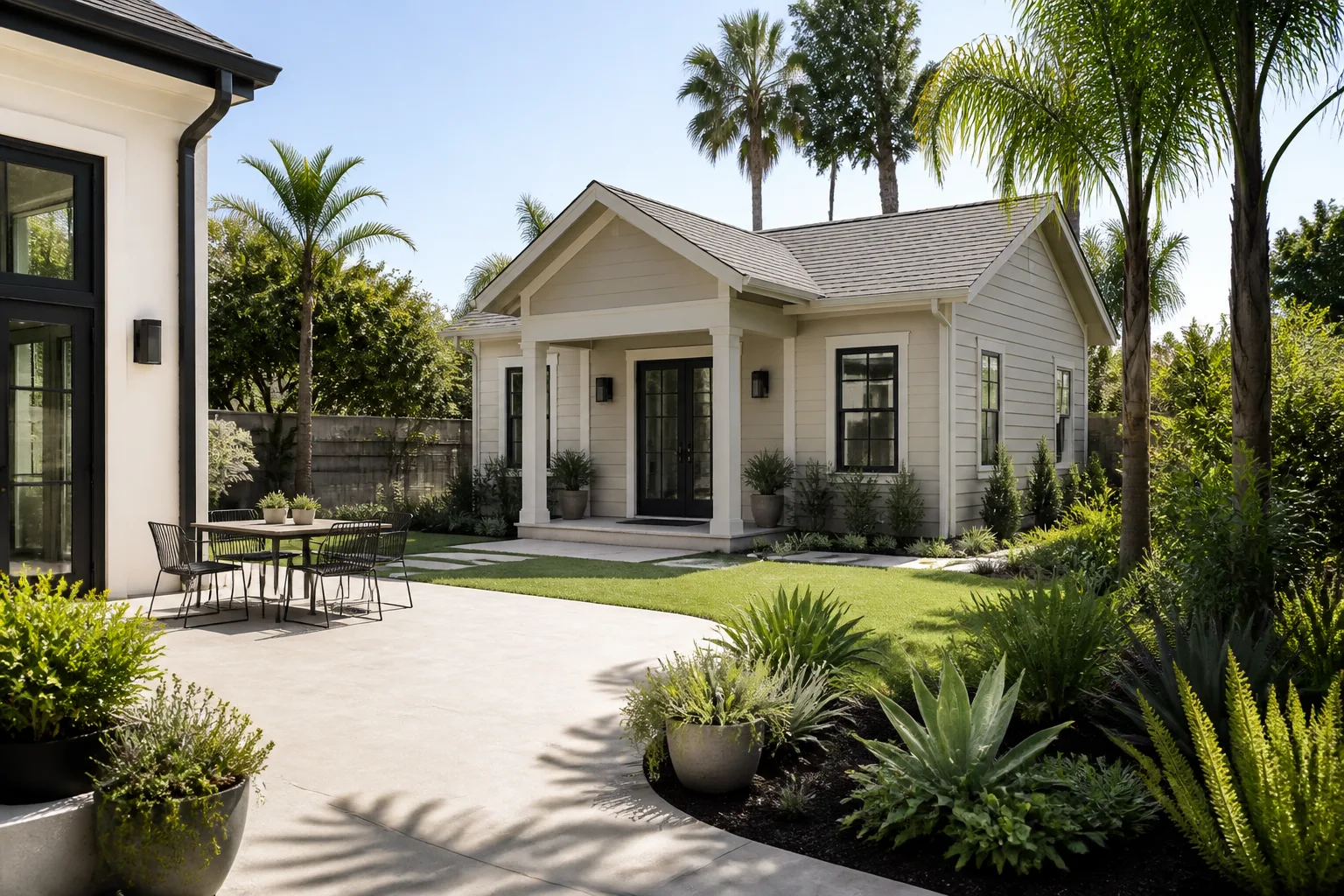
If you own an Abodu home addition or ADU in Fort Lauderdale and something isn’t right, here’s the straight answer: we’re an independent general contractor that services and repairs Abodu structures, and full replacement or major repair work typically runs $45,000 – $130,000 depending on what failed, how far the damage goes, and what the city requires on permits. Most owners call us because they’ve noticed water staining at the roofline, a door that no longer closes square, or drywall cracks widening along the seam where the Abodu module meets the foundation. Those are rarely cosmetic. In South Florida’s humidity and storm cycles, those symptoms usually mean the structure has moved, water has found a way in, or the original flashing was never lapped correctly.
We’re not affiliated with Abodu, and we don’t pretend to be. What we are is a Fort Lauderdale remodeling company that has opened enough walls on prefab ADUs to know exactly where they fail first. Trevor Nash has been running crews across South Florida for the better part of two decades, and he’ll tell you the same thing he tells every Abodu owner: the module itself is usually fine. It’s what happens where the module meets the site that causes the trouble.
Which Abodu Models This Applies To
Abodu’s line includes the Studio, the One-Bedroom, and the Two-Bedroom models, all of which share the same core prefabricated chassis and connection detailing. From a repair standpoint, the model matters less than the vintage. Early Abodu units delivered before roughly 2021 used a different sill-flashing profile than what the company ships now, and in Fort Lauderdale’s rain loads, that original profile is the single most common source of water intrusion. The updated flashing uses a taller back dam and a wider drip edge. If your unit still has the older style, the joints at the floor-to-wall transition are worth inspecting every year before hurricane season.
The identifying information you need is on the manufacturer’s plate, usually mounted inside the utility closet or on the electrical panel cover. You’re looking for the model designation and serial number, plus the date of manufacture. When you call us, have that plate photographed. It tells us which flashing generation you have, which window package was installed, and whether the original roof membrane was the single-ply TPO or a later upgrade. For Abodu specifically, we recommend OEM-sourced flashing components wherever available, because the weep geometry is matched to the factory wall assembly. Generic flashing from a big-box supplier works until it doesn’t, and in Fort Lauderdale, “until it doesn’t” usually means the first summer storm.
Styles & brands we work with







Signs Your Abodu Home Additions & ADU Is Failing
- Water staining at the ceiling-to-wall corner, especially on the east and south elevations. This is the classic Abodu flashing failure. The original lap wasn’t enough for wind-driven rain, and once the paper facing on the drywall wicks moisture, the stain spreads fast. By the time you see paint bubbling, the framing behind it has been damp for weeks.
- A door that scrapes the threshold or won’t latch cleanly anymore. Prefab modules sit on steel piers or a slab, and Fort Lauderdale’s sandy soil settles unevenly. That’s normal. What isn’t normal is when one corner of the unit drops enough to bind a door, because that means the original pier adjustment has been lost and the floor cassette is now carrying the load it was never designed to carry.
- Drywall cracks that run diagonally from the corner of a window or door opening. These are shear cracks. They tell you the unit is racking slightly, usually because the hold-down hardware at the module-to-foundation connection has loosened or corroded. In a hurricane zone, that connection is doing structural work, not just keeping the box in place.
- A musty smell that comes and goes with the weather. That’s moisture trapped in the wall cavity. The smell is the clue that water is getting in somewhere and not drying out. In Florida heat, that turns to mold inside the wall assembly faster than you’d think.
- The mini-split runs constantly but the room never really cools. Could be an undersized unit, but on Abodu structures we’ve serviced around Victoria Park and Sailboat Bend, the usual culprit is air leakage at the chase where the refrigerant lines pass through the wall. If that penetration wasn’t sealed properly at install, you’re air-conditioning the outdoors and pulling humid air into the wall at the same time.
See the difference
 Before
 After
After Before
 After
After Before
 After
AfterReplacement Cost & What’s Included
For a full Abodu home addition or ADU replacement in Fort Lauderdale, you’re looking at $45,000 – $130,000 installed. That’s a wide range because it covers everything from a structural repair to one section of the wall assembly all the way up to a complete removal and rebuild of the unit. What drives the number: how much of the original envelope has to come off, whether the foundation piers need re-leveling, what the city of Fort Lauderdale requires on the permit, and whether the existing unit’s electrical or plumbing rough-ins can be reused and brought to current code.
Every job we price includes the same things: a written line-item quote before you commit to anything, the tear-out and disposal of failed materials, new flashing and weather barrier installed to current code, re-leveling of the foundation piers if you’re in an area like Shady Banks or Lake Ridge where organic soil under the slab moves, and a written 365-day warranty on our workmanship. If something we installed fails inside that year, we come back and fix it at no charge. That’s not a verbal promise. It’s in the paperwork.
DIY or Call Us?
There are two things an Abodu owner can safely do before picking up the phone. First, find the manufacturer’s plate and photograph it, like we mentioned above. Second, take a slow walk around the unit after the next heavy rain and note where water is ponding against the foundation or where the siding stays dark after everything else has dried. Those notes save us an hour of diagnostics and save you money. That’s worth doing yourself.
What isn’t worth doing yourself is anything that involves removing siding, opening the wall, re-flashing a roofline, or tightening the hold-downs at the foundation. Most of this work is done on a ladder or a roof, the materials are heavy, and if the flashing is installed wrong, you’ll have the same leak six months later and a bigger repair bill. Trevor’s take: you don’t save money doing structural work twice. If you’re in Fort Lauderdale and you’ve spotted any of the signs above, call (754) 551-2922. We’ll send a background-checked, uniformed technician to look at it, and you’ll get a written price before any work starts.
FAQs
The factory-built module itself is designed for a 50-year service life, but the site-built connections, flashing, and foundation have a realistic lifespan of 15 to 25 years in Fort Lauderdale’s salt air and storm cycles before they need real attention. The structure generally outlasts the weatherproofing details, so maintenance between years 10 and 15 is what extends the life of the unit. Call (754) 551-2922 if you want us to inspect the connections on your unit and give you an honest assessment.
In most cases, yes. If the module itself is still square and the damage is confined to flashing, the lower wall assembly, or the foundation connections, a targeted repair runs well under the cost of replacement and gets the unit back to weathertight condition. The exceptions are when water has been moving inside the walls long enough to compromise the structural sheathing, or when the unit has racked to the point where window and door openings are no longer plumb. Call (754) 551-2922 and we’ll tell you which situation you have after we open a small section and look.
A flashing repair or foundation re-level typically takes three to five working days on site. A full wall-assembly rebuild or complete replacement runs four to eight weeks depending on permit timing with the city of Fort Lauderdale. Either way, you’ll get a written schedule before we start, and the arrival window we give you is the window we keep. We don’t pull crews off your job to go chase another one.
We stock the common flashing profiles, weather barrier materials, and fasteners for both the older and current Abodu designs on our trucks, along with a range of SIP-panel screws and the sealants rated for use with prefab wall assemblies in a coastal climate. For OEM-specific components tied to your unit’s serial number, we order direct and typically have them in hand within two weeks. We also work with KraftMaid, Cambria, and Silestone components for the interior finish work that often follows a structural repair. Call (754) 551-2922 and we’ll tell you exactly what’s on the truck and what has to be ordered before you spend a dollar.
Written by Trevor Nash, Owner, Penhallow Remodeling Fort Lauderdale at Penhallow Remodeling Fort Lauderdale, serving Fort Lauderdale and nearby areas.


