
Free written scope consultation - allowances, timeline, and change-order rules on paper before a single trade is scheduled
Cover Home Additions & ADU: The Fort Lauderdale Owner’s Guide
Cover home additions and ADU projects in Fort Lauderdale typically run $45,000 to $130,000 installed, depending on square footage, foundation type, and whether you’re building attached or detached. That’s the honest range, and it’s the number we put in writing before any work starts. Most owners discover they need us when an existing addition fails: a roof tie-in leaks during a summer storm, a slab cracks along the old foundation line, or a previously converted garage starts pulling away from the main structure. If you’re reading this, you’ve probably already learned that Fort Lauderdale’s humidity, hurricane wind codes, and shifting sandy soil punish additions that weren’t built to the right standard the first time.
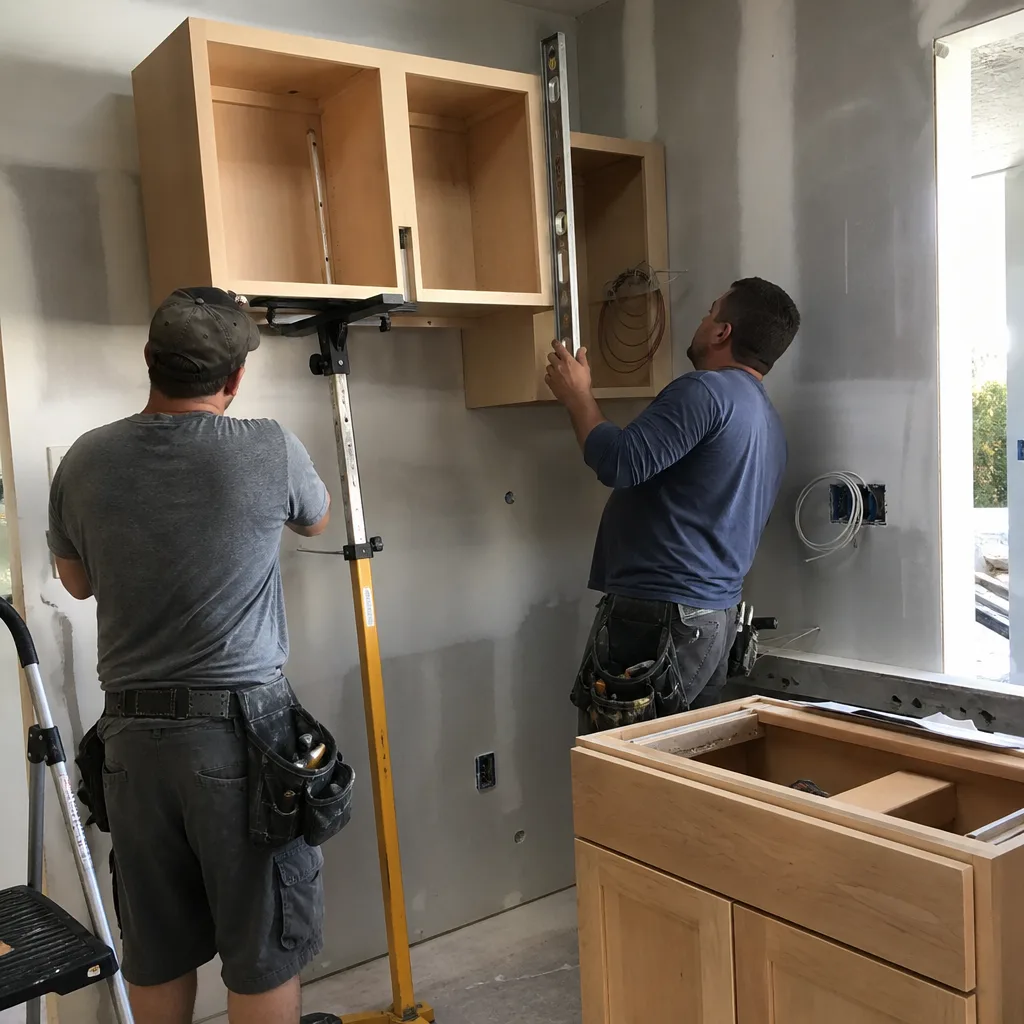
We’re an independent Fort Lauderdale remodeling contractor, not affiliated with Cover. But we’ve repaired, rebuilt, and finished enough Cover-style additions and ADUs across this city to know exactly what holds up here and what doesn’t.
Which Cover Models This Applies To
The “Cover” product line refers to prefabricated and modular home additions and accessory dwelling units, and the compatibility issue isn’t about a model number the way it is with a faucet or a cabinet hinge. What matters is how the Cover unit was engineered to tie into your existing structure. The critical spec is the roof connection detail: Cover additions built for drier climates often use a standard lap flashing, which fails inside two or three years under Fort Lauderdale’s afternoon downpours. We regularly see owners near Victoria Park and Riverside Park whose Cover addition roof was flashed with the wrong profile for South Florida wind-driven rain. The water gets in, the trusses swell, and suddenly you’ve got a $45,000 problem on top of your original investment.
If you have the original plans or the Cover installation packet, look for the roof pitch, the wall assembly spec (typically 2×4 or 2×6 framing with a listed sheathing type), and the foundation detail: slab-on-grade or pier-and-beam. Those three details tell us what replacement parts and fasteners are compatible. For the OEM versus aftermarket decision, we’ll be straight with you: Cover’s proprietary wall panel connectors are worth keeping when they’re intact. But for flashing, moisture barrier, hurricane straps, and anchor hardware, we source from recognized trade brands that meet or exceed Miami-Dade County product approval standards. Those parts are made for this climate, and they’re what we stock on the truck.
Styles & brands we work with







Signs Your Cover Home Addition or ADU Is Failing
- Water staining at the roofline where the addition meets the main house. This is almost always a failed tie-in flashing. In Fort Lauderdale, the driving rain comes at the wall horizontally, not from above. Standard shingle overlap doesn’t stop it. The fix is a re-flashed, properly counter-flashed connection, and it’s a common repair for us in neighborhoods like Sailboat Bend and Tarpon River.
- Cracks running at a 45-degree angle from the corners of windows or doors in the addition. That’s differential settlement. The Cover unit’s foundation is moving at a different rate than the original slab, which is common when the original footer wasn’t deep enough for Fort Lauderdale’s sandy, high-water-table soil. We level and sister the framing, then address the drainage that caused it.
- Doors and windows that stick in summer but close fine in winter. Humidity expansion. If the Cover wall assembly didn’t include a proper vapor barrier for a coastal climate, the framing takes on moisture and swells seasonally. We’ve corrected this by adding interior moisture management and re-hanging openings with proper clearances.
- Musty smell inside the ADU, especially after rain. This tells us moisture is getting behind the siding or stucco. South Florida’s humidity means once water is in the wall cavity, it does not dry out on its own. The sheathing rots from the inside, and by the time you smell it, the repair is usually structural, not cosmetic.
- Visible separation between the addition and the main structure at the exterior corner. This is the failure that worries us most. It means the structural tie between the two buildings has failed. In hurricane country, that connection is what keeps the addition attached to your house when winds hit 140 miles per hour. We treat this as a priority repair, not a cosmetic one.
See the difference
 Before
 After
After Before
 After
After Before
 After
AfterReplacement Cost & What’s Included
Here’s what you should expect to pay in Fort Lauderdale for the work we’re describing:
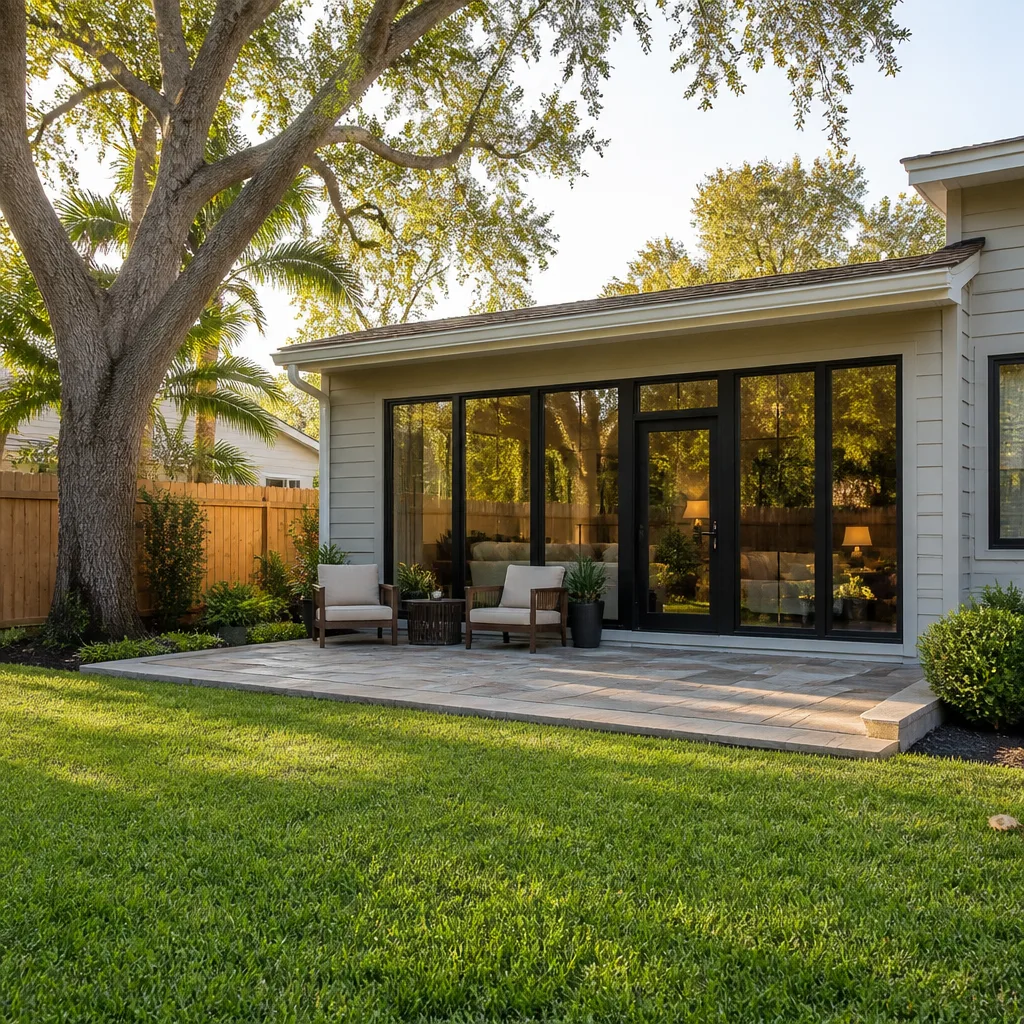
- Home addition (attached, 300 – 800 sq ft): $45,000 – $130,000
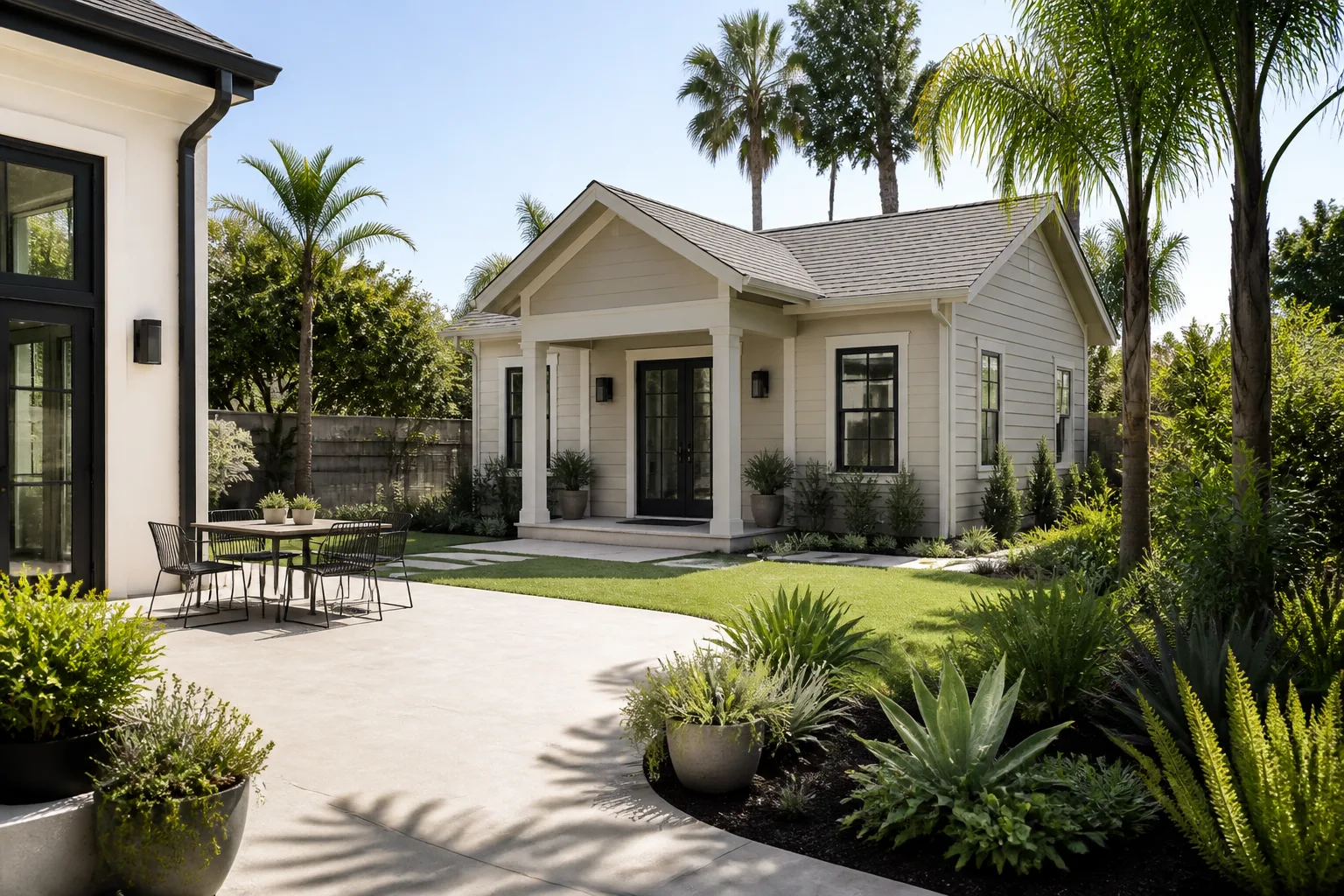
- ADU construction (detached, 400 – 900 sq ft): $90,000 – $220,000
- Garage conversion to living space: $30,000 – $80,000
- Structural repair of an existing Cover addition (tie-in, foundation, or framing correction): typically 15 – 30% of the original build cost
What drives the number up or down: the condition of what’s already there, whether the foundation needs piering or slab repair, whether we’re re-roofing the tie-in or just re-flashing it, and whether your addition needs hurricane strap retrofitting to meet current code. If the addition was built before 2002, when Florida adopted stricter wind-load standards, count on bringing the entire roof-to-wall connection up to code while we’re in there.
Every quote includes all parts, labor, permits, and disposal. The price you get in writing on day one is the price on the invoice. And every project carries Penhallow’s 365-Day Done Right Promise: if something fails inside a year, we come back and fix it at no charge. That’s in writing too.
DIY or Call Us?
Here’s the honest split. What you can safely do yourself: clear the area so we can inspect, note where you see stains or cracks, and pull your original permits or Cover paperwork if you have it. That genuinely saves time. What we would not recommend doing yourself: any structural work on a roof tie-in, any foundation or slab repair, any work on load-bearing walls, or anything involving hurricane strapping. A failed roof tie-in on an addition in Fort Lauderdale is a life-safety issue, not a weekend project. The same goes for electrical and plumbing work inside an ADU that’s shown water intrusion. If the wall cavity is wet and there’s wiring in there, that’s a job for a licensed contractor with the right test equipment.
If you’re in Fort Lauderdale and your Cover addition or ADU is showing any of the signs above, call us at (754) 551-2922. We’ll come out, assess it honestly, and give you a written number. The estimate is free, and there’s no obligation. We’ll tell you what needs doing today, what can wait, and what it costs either way.
FAQs
A properly built addition or ADU in Fort Lauderdale should last 50 to 75 years structurally, but the roof tie-in flashing and any exterior sealants typically need replacement every 8 to 12 years because of our heat, humidity, and salt air. If your Cover addition is failing in under 5 years, the original installation likely used materials and details that weren’t suited for a coastal climate. Call (754) 551-2922 for an inspection and we’ll tell you exactly what’s failing and what it costs to correct.
Most failing additions and ADUs in Fort Lauderdale can be repaired without a full teardown, especially if the problem is caught at the flashing, framing, or drainage stage. The exception is severe foundation settlement or widespread rot throughout the wall assembly, which sometimes makes selective demolition more cost-effective than piecemeal repair. We’ll give you a written assessment before any work starts, so you know exactly what we found and what we recommend.
A focused repair like a roof tie-in re-flash or a structural tie repair typically takes 2 to 5 days once permits are in hand. A larger correction involving foundation work, reframing, and re-roofing can run 3 to 6 weeks depending on scope and inspection schedules. When we quote the job, we’ll give you a defined arrival window and a realistic completion date, and we’ll keep you updated if anything shifts.
Yes, we keep hurricane straps, Miami-Dade approved flashing, moisture barriers, structural connectors, and the anchor hardware needed for Cover-style additions and ADUs in stock and on our trucks. For proprietary Cover wall panel connectors, we order OEM parts when needed and use trade-brand equivalents that meet code when they’re a better fit. Call (754) 551-2922 and tell us what your addition needs, and we’ll confirm parts availability before scheduling.
Written by Trevor Nash, Owner, Penhallow Remodeling Fort Lauderdale at Penhallow Remodeling Fort Lauderdale, serving Fort Lauderdale and nearby areas.


