
Free written scope consultation - allowances, timeline, and change-order rules on paper before a single trade is scheduled
James Hardie Roofing: The Fort Lauderdale Owner’s Guide
We stock and install James Hardie-compatible roofing components throughout Fort Lauderdale, with most replacement jobs running $800 – $2,500 installed depending on the part and the extent of the damage. The typical call starts the same way: a homeowner notices a water stain on the ceiling after a heavy Florida downpour, or spots a piece of fascia flapping after a wind event off the Atlantic. By the time we arrive, the failed part has usually been quietly letting moisture in for weeks longer than anyone realized.
One thing worth saying up front: Penhallow Remodeling Fort Lauderdale is an independent contractor. We are not affiliated with James Hardie, and we do not speak for their warranty department. What we do is match the right part to your existing James Hardie installation, price it in writing, and stand behind the repair for a full year under our 365-Day Done Right Promise. That matters in Fort Lauderdale, where salt air and hurricane season test every exterior surface on a house.
Which James Hardie Models This Applies To
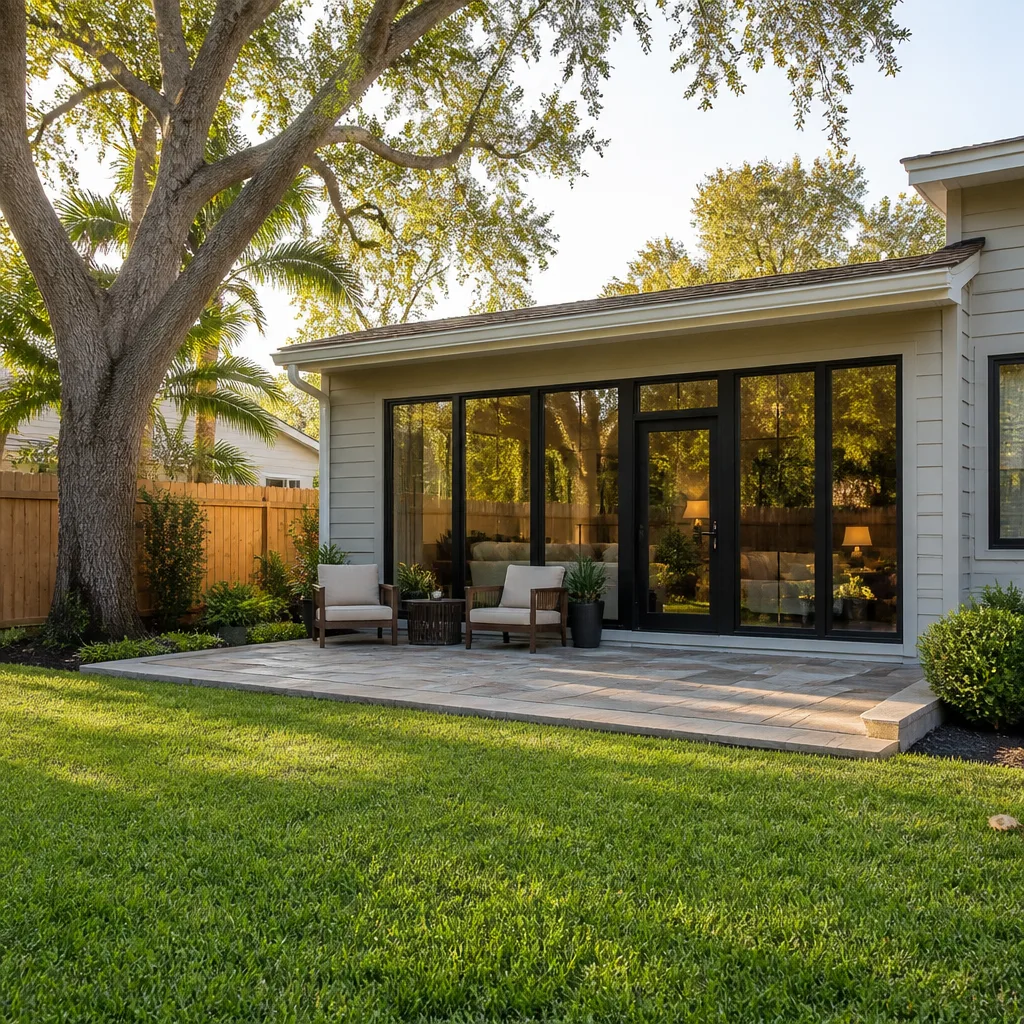
James Hardie’s roofing-adjacent product line breaks down into a few specific families, and the part you need depends on which one you have. Most Fort Lauderdale homes built or re-sided in the last 15 years use HardiePlank lap siding, HardiePanel vertical siding, or HardieSoffit panels under the eaves. If your soffit or fascia failed, you almost certainly have HardieSoffit panels or HardieTrim boards, which come in standard 12-inch by 144-inch sheets and 1-inch by 6-inch trim boards respectively.
The compatibility gotcha we see most often: James Hardie products are not interchangeable with generic fiber cement off the shelf. The factory edge profiles, fastener patterns, and color-matched ColorPlus finishes are specific to Hardie. An aftermarket board can look right on the truck and wrong on the wall. We source OEM James Hardie parts through the brand’s regional distribution network, and while a quality aftermarket equivalent exists for some trim pieces, we default to OEM unless you ask us to price both options. That keeps the color match, the grain, and the install specs honest.
To identify your part before you call, look for the James Hardie product code printed on the back of a removed board, or snap a photo of the damaged area and we will match it from our inventory.
Styles & brands we work with







Signs Your James Hardie Roofing Is Failing
- Water staining on the underside of eaves or soffit panels. This usually means a seam has opened or a fastener has rusted through, letting rainwater wick into the fiber cement. James Hardie panels are moisture-resistant but not waterproof at the joints, and a failed joint in a Fort Lauderdale summer is a standing invitation for mold.
- Visible cracking at the corner of a fascia or trim board. Fiber cement is rigid. When a hurricane strap or rafter tail shifts even slightly, the board cannot flex, so it cracks. We see this most often on homes within half a mile of the Intracoastal, where wind loading is real.
- Fastener heads rusting or popping proud of the surface. Salt air accelerates corrosion on the wrong fastener. James Hardie specifies corrosion-resistant fasteners for coastal zones, and when a previous contractor used drywall screws or common nails, the heads fail first and the board loosens.
- Gaps opening between trim boards and the house wall. This is typically a substrate movement issue. The board itself may be fine, but the structure behind it has shifted, and the joint separation is letting water behind the siding.
- Peeling paint or chalky finish on a ColorPlus-coated board. ColorPlus finishes carry a 15-year warranty, but that clock starts when the board is installed, not when you bought the house. If the finish is failing, the board may have reached the end of its service interval even if it looks structurally sound.
See the difference
 Before
 After
After Before
 After
After Before
 After
AfterReplacement Cost & What’s Included
For most James Hardie roofing-adjacent repairs in Fort Lauderdale, you are looking at $400 – $1,800 for roof repair work like fascia, trim, and soffit replacement, and $600 – $2,500 if the job involves tile roof repair adjacent to the Hardie components. The range comes down to three things: how much material is damaged, whether we need to pull and reset tile or shingle to access the failed board, and whether the underlying substrate (the structural layer the Hardie fastens to) is still sound. If water has been getting in for a while, you may be looking at sheathing replacement, which adds to the total.
Every quote includes the part, the labor, the fasteners, the sealant, and the cleanup. We write the number down before work starts, and that is the number on your invoice. No change orders unless you ask us to expand the scope. The work is covered by our 365-Day Done Right Promise: if the repair fails within a year, we come back and fix it free. No re-inspection fee, no service call charge.
DIY or Call Us?
If you want to check the extent of the damage yourself before calling, that is time well spent. You can look for missing fastener heads, run a hand along the underside of the soffit for soft spots, and check whether trim boards are pulling away from the wall. What we do not recommend is pulling a damaged board yourself. James Hardie panels are heavy, and a partial release can drop a 12-foot section of fiber cement onto a ladder, a window, or a person. The boards also create silica dust when cut or broken, which is a respiratory hazard you don’t want in your driveway.
If the board is cracked, the fastener is rusted, or the seam has opened, call us at (754) 551-2922. We will put eyes on it, tell you honestly whether it is a $400 patch or a $2,000 rework, and give you the number in writing. Trevor Nash has handled enough Fort Lauderdale exteriors to know that the wrong fastener in this climate costs more than the right one ever could.
FAQs
James Hardie fiber cement panels and trim boards typically last 25 to 40 years in Fort Lauderdale before material replacement, but the ColorPlus finish and the fasteners are the variables that shorten the timeline. Salt air within a mile of the coast can corrode under-specified fasteners in 10 to 15 years. If you are seeing rust heads or chalky finish before year 15, the problem is usually installation, not product. Call (754) 551-2922 and we will inspect it for free.
Small hairline cracks in a trim board can sometimes be sealed and repainted, and we will tell you honestly if that is a viable short-term fix. But once a board has cracked through its thickness, pulled away from the wall, or let water behind the panel, the proper repair is a section replacement. Patching over a failed joint just moves the leak. Call us for an honest assessment, and we will show you exactly what you are dealing with.
Most single-section replacements on a Fort Lauderdale home take 4 to 8 hours on site. If we have to access the area by removing tile or shingle first, the job may run a full day. We set the arrival window in writing before work starts, and we leave the job site clean.
We stock common James Hardie soffit panels, trim boards, and the correct corrosion-resistant fasteners on our work vehicles. Unusual sizes or specific ColorPlus finishes can take 2 to 5 days to pull from the regional distributor. If we do not have it on the truck, we will tell you when it will be here and give you the price before we order it. Alongside James Hardie parts, we also keep parts for KraftMaid, Cambria, and Silestone products on hand, since remodeling jobs often turn up more than one issue.
Written by Trevor Nash, Owner, Penhallow Remodeling Fort Lauderdale at Penhallow Remodeling Fort Lauderdale, serving Fort Lauderdale and nearby areas.


