
Last updated October 15, 2026


Free written scope consultation - allowances, timeline, and change-order rules on paper before a single trade is scheduled
The Complete Guide to Construction in Fort Lauderdale
Fort Lauderdale has more than 165 miles of navigable waterways, which means nearly every home sits close enough to salt air that the materials spec your contractor chooses on day one will determine whether your remodel holds up for five years or twenty-five. This guide is written for homeowners who want to understand Fort Lauderdale construction before signing a contract, not after demo day reveals a problem. You’ll learn how Broward County flood zones change what you can build, why Miami-Dade product approvals follow you north into Fort Lauderdale, which materials fail first in coastal air, and what a written price actually protects you from in this market. We’re Penhallow Remodeling Fort Lauderdale, and we’ve been navigating these specific conditions long enough to know where the expensive surprises hide.
Quick Answer
Construction in Fort Lauderdale is governed by three overlapping forces: Broward County flood-zone elevation requirements, the shadow of Miami-Dade product approval standards for windows and doors, and a salt-air environment that punishes the wrong materials faster than inland Florida ever will. A compliant remodel starts with understanding your property’s specific flood zone designation and elevation certificate, then choosing materials rated for high-velocity hurricane zones and corrosion resistance. See our Construction Permits, Codes & Inspections in FL: What You Need to Know for a deeper look at the rules that govern every step. Homeowners who nail down a written price before work starts, insist on a written guarantee, and verify that products carry the right approvals avoid the most common and costliest mistakes in this market.
Styles & brands we work with







Table of Contents
- How Fort Lauderdale Flood Zones Dictate What You Can Build
- Why Miami-Dade Product Approvals Matter in Fort Lauderdale
- The Salt-Air Corrosion Hierarchy: What Fails First Near the Water
- City of Fort Lauderdale vs. Unincorporated Broward County Permitting
- What a Written Price Before Work Starts Protects You From
- Material Selection for Coastal Fort Lauderdale Remodels
- The Remodeling Process in Fort Lauderdale, Step by Step
- What Construction Costs in Fort Lauderdale Right Now
How Fort Lauderdale Flood Zones Dictate What You Can Build
Fort Lauderdale’s flood map is not a single document you can glance at once and forget. It’s a block-by-block patchwork of FEMA designations, and two homes on the same street can live under entirely different rules. The three zones you’ll encounter most often in Fort Lauderdale are AE, VE, and X. Zone AE means the property sits in a floodplain with a defined base flood elevation. Zone VE is worse: it’s a coastal high-hazard area where wave action adds to the water height, and it comes with the strictest elevation and foundation requirements. Zone X is the relatively safe designation, but in Fort Lauderdale, even Zone X homes can sit within walking distance of a canal that turns aggressive during a king tide or a named storm.
What this actually means for your remodel: if your home sits in Zone AE and you’re planning a substantial improvement, the City of Fort Lauderdale Building Services Department will likely require that your lowest finished floor sit at or above the base flood elevation shown on your property’s elevation certificate. If you don’t have an elevation certificate, you can’t pull a permit for major work. That certificate is the single most important document a Fort Lauderdale homeowner can have before starting a remodel. In Zone VE, the requirements extend to how the structure is anchored and what can live below the elevated floor. Enclosed areas below the base flood elevation in VE zones are limited to parking, storage, and access, and the walls must be breakaway or flood-vented. You cannot legally convert that ground-level space into a bedroom or a finished den, no matter how many contractors tell you it’s common practice. It’s not just a code violation; it’s a decision that affects flood insurance rates and resale.
In our experience, the most expensive mistake a Fort Lauderdale homeowner makes is assuming their neighbor’s remodel rules apply to their house. We’ve walked into homes in Victoria Park where one side of the street required elevation work and the other side did not. Before you sketch a single cabinet layout, pull your flood zone designation and your elevation certificate. A general contractor in Fort Lauderdale who checks these documents before pricing your project is already doing more than half the market. One who ignores them is setting you up for a permit rejection or a failed inspection weeks after demo day.
Why Miami-Dade Product Approvals Matter in Fort Lauderdale
Miami-Dade County operates its own product approval system for building materials that must withstand high-velocity hurricane conditions, and that system casts a long shadow north. Even though Fort Lauderdale sits in Broward County, the products you install in your remodel often carry Miami-Dade Notices of Acceptance, or NOAs. Why does a Dade County standard matter here? Two reasons. First, the Florida Building Code incorporates Miami-Dade’s stricter testing protocols for windows, doors, roofing, and other exterior envelope products in the High Velocity Hurricane Zone, and much of coastal Fort Lauderdale falls under that designation. Second, insurance carriers and mortgage lenders frequently ask for Miami-Dade approved products regardless of the letter of the code. If your new windows carry an Miami-Dade NOA, your wind mitigation credits improve and your premium drops.
Window and door replacement is where this bites hardest. A remodel that includes new impact windows or sliding glass doors in Fort Lauderdale will require products tested to Miami-Dade standards if the home sits in the HVHZ, which includes every address east of Federal Highway and many west of it. Brands like CWS, ES Windows, and ECO Window Systems manufacture impact-rated lines with Miami-Dade approvals, and Mr-Glass fabricates and installs systems that meet the same standards. The wrong window on a Fort Lauderdale canal-front home is not a hypothetical problem. It’s a permit rejection, an insurance adjustment, and a failed inspection waiting to happen.
What to check before you buy: every window, exterior door, and skylight should come with a product approval document, and that document should be legible, current, and specific to the size and configuration you’re installing. A verbal assurance from a sales rep that the product is “impact rated” is not the same as a valid NOA. Ask to see the document. If the company hesitates, find another company. This is standard practice in kitchen remodeling in Fort Lauderdale when the project includes exterior doors or a pass-through window, and it’s absolutely non-negotiable for any opening that faces the Atlantic side of the ridge.
The Salt-Air Corrosion Hierarchy: What Fails First Near the Water
Salt air in Fort Lauderdale is not evenly distributed. Homes east of US-1, homes on canals, and homes within a mile of the Intracoastal get the worst of it, but the corrosive influence reaches surprisingly far inland when the prevailing southeast breeze pushes it. What fails first depends on what the builder specified, and in coastal Fort Lauderdale, the specification determines lifespan more than the brand. Here’s the corrosion hierarchy, from most vulnerable to most resistant, based on what we see when we open walls and pull fixtures in this market.
- Galvanized steel fasteners and brackets. The zinc coating sacrifices itself to salt, and once it’s gone, the steel underneath rusts through in a few years. We regularly see galvanized hangers inside canal-front framing that crumble when touched.
- Standard interior drywall screws. These have no corrosion rating at all, and in homes near the water, they bleed rust through paint within three to five years if used on exterior-adjacent surfaces.
- Aluminum window frames without marine-grade coating. Bare aluminum pits and corrodes in coastal air, especially where salt spray lands and doesn’t rinse away. Anodized or powder-coated aluminum holds up substantially better.
- 316 stainless steel. This is the marine-grade alloy, and it’s what you want for fasteners, hinges, and hardware anywhere near salt exposure. It’s more expensive than 304, and it’s worth it.
- Copper and brass. These age gracefully in salt air. Copper develops a patina that protects the metal beneath. Brass holds up well on door hardware and plumbing trim.
What this means for a Fort Lauderdale remodel: every fastener, bracket, and hardware item that goes into your project should be specified for corrosive environments, which in practical terms means 316 stainless or coated fasteners and marine-grade exterior hardware. The cost difference on a whole-home remodel is a few hundred dollars. The cost of replacing rusted-through hardware after five years is thousands. This is the kind of decision that separates a contractor who knows Fort Lauderdale from one who works from a generic South Florida template. If your contractor can’t tell you what fastener spec they’re using, ask again until you get an answer.
City of Fort Lauderdale vs. Unincorporated Broward County Permitting
Fort Lauderdale is a functioning city with its own Building Services Department, and the permitting process inside city limits differs from unincorporated Broward County in ways that add weeks to a project if you assume the wrong jurisdiction. Properties with a Fort Lauderdale mailing address are not necessarily inside city limits. Some sit in unincorporated Broward, where the county’s Building Code Services Division handles permitting, and others fall into smaller municipalities like Wilton Manors, Oakland Park, or Lauderdale-by-the-Sea, each with their own process. The wrong assumption about jurisdiction is a classic delay: you schedule your remodel, your contractor pulls the wrong permit or submits to the wrong agency, and the project waits. Learn the warning signs in our Construction Warning Signs: A Fort Lauderdale Homeowner’s Reference Guide.
Inside the City of Fort Lauderdale, permits are handled through the Building Services Department, and the city has moved much of its process to electronic plan review. That’s efficient when the plans are compliant and the application is complete. It’s a wall when a reviewer returns the plans for corrections. Fort Lauderdale’s plan reviewers are rigorous about flood-zone compliance, product approvals, and the documents that prove both. In unincorporated Broward County, the review priorities are similar, but the process, the software, and the review turnaround times differ. A contractor who has pulled permits only in Miami-Dade or only in Palm Beach will waste your time figuring out Broward’s system.
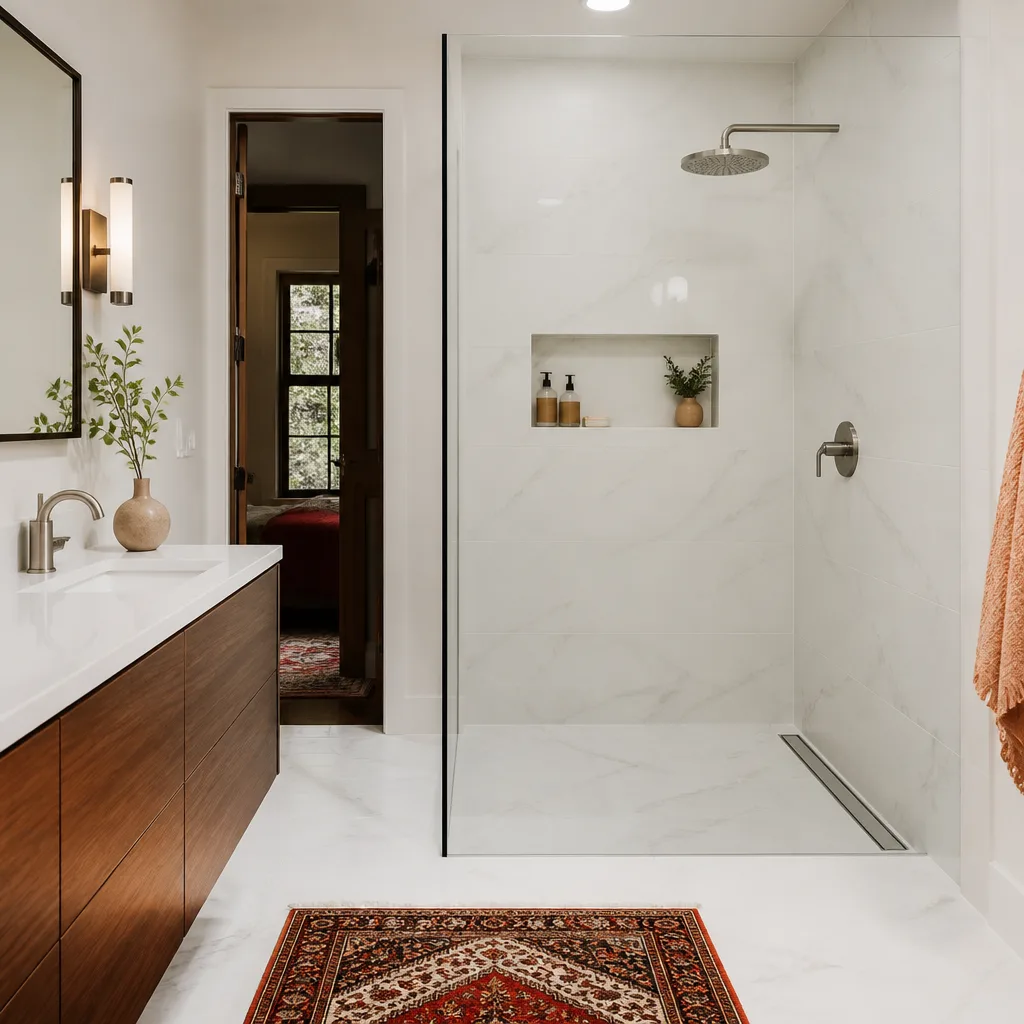
What should a Fort Lauderdale homeowner do? Before signing a contract, confirm the jurisdiction of the property. Ask the contractor which agency will issue the permit, and ask them to name the flood zone and the product approval requirements for the work you’re planning. If the answer is vague, that’s a red flag. We pull permits for every project that requires one, and we tell the homeowner exactly which agency we’re working with before the application goes in. That’s the way bathroom remodeling in Fort Lauderdale and any other permitted work should function: no surprises about where the approval comes from.
What a Written Price Before Work Starts Protects You From
Between 2020 and 2024, construction labor costs in South Florida swung 18 to 22 percent depending on the trade. Lumber spiked, then settled, then spiked again. Supply chains for cabinets, windows, and plumbing fixtures went from six weeks to six months and back. In that kind of market, a verbal estimate is a suggestion, not a commitment. A written price before work starts is the only thing that keeps the number on demo day attached to the number on the final invoice.
What a written price actually protects you from is the change-order death spiral. It starts with a contractor giving you a range. Then demo reveals something unexpected, which happens on almost every remodel. The contractor says the range didn’t cover it, and now you’re paying more. Then the material you picked isn’t available, and the substitute costs more. Then the schedule slips, and the crew moves to another job while you wait. Each of these is an opportunity for the price to move, and without a written number, it always moves up. A written price does not mean the price can never change. It means changes must be identified, documented, and agreed to in writing before the work changes. That distinction is the difference between a contractor who manages your project and one who manages your checkbook.
At Penhallow Remodeling, we operate under the Kingswell standard that every job gets a written price before work begins. That standard has been in place since 2004, and it’s non-negotiable. The number we give you on day one is the number on your invoice, unless you change the scope, in which case the change is priced and approved in writing before we touch it. Operating under The Kingswell Way means say the price before the work, show up in the window we gave, leave the place cleaner than we found it. Trevor Nash leads our team with that expectation on every project.
Beyond the price, the guarantee matters equally. Every project we complete includes a written guarantee, and that guarantee is backed by the 365-Day Done Right Promise. If the work fails inside the guarantee period, we come back and fix it at no charge. If a repair fails, the second visit is free, no service call, no re-inspection fee. That promise is not a marketing line. It’s printed on the documents we hand you before work starts.
Material Selection for Coastal Fort Lauderdale Remodels
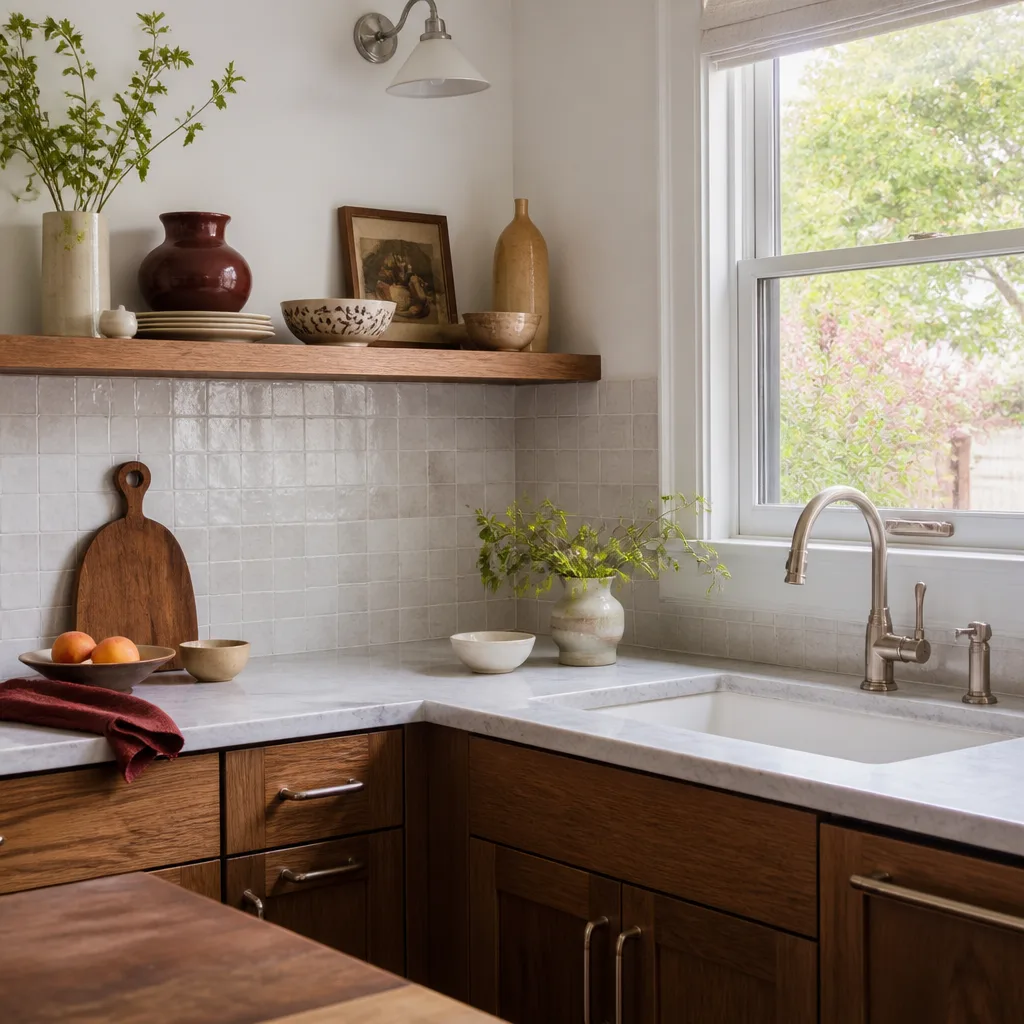
Material selection in Fort Lauderdale is not an aesthetic decision first. It’s a durability decision, and the wrong choice near salt air shows up faster here than almost anywhere else in Florida. The products behind a remodel matter as much as the install, because the best installation in the world will not save a material that was never built for this environment. When we spec a kitchen remodel in Fort Lauderdale, we’re thinking about what the coastal air will do to every surface over a decade, not just how it looks on install day.
Cabinetry is a good example. We install KraftMaid and Wellborn cabinetry because these lines carry finishes and substrate specifications that hold up in South Florida humidity. The substrate matters: plywood boxes handle moisture swings better than particleboard, and the door finishes on recognized trade brands carry warranties that mean something. For countertops, we work with Cambria, Silestone, and Caesarstone quartz. Quartz is non-porous, which matters in a climate where standing water and humidity are constant. Cambria specifically carries a lifetime warranty, which layers on top of our own written guarantee. That’s the point: multiple layers of protection, because Fort Lauderdale will test every layer eventually.
Fixtures follow the same logic. Kohler and Moen are the brands we name in our proposals because their finishes resist corrosion better than generic hardware, and their warranties are actually honored. Blanco sinks, Delta faucets, Toto toilets, Grohe valves. These are not interchangeable names. Each one carries a finish specification and a warranty that matters when salt air is part of the equation. The same applies to exterior products. James Hardie siding holds paint longer in coastal conditions than wood and resists the rot that humidity invites. Belgard and Unilock pavers handle the seasonal flooding of a Fort Lauderdale patio without shifting the way cheaper pavers do. Therma-Tru exterior doors carry the Miami-Dade approvals we discussed earlier.
The lesson: every material in a Fort Lauderdale remodel should be chosen for how it behaves in this specific environment, not for how it looks in a showroom. A knowledgeable contractor should be able to tell you why each material was selected. If the answer is “it’s what we always use,” ask what that material does in salt air. If there’s no answer, keep looking.
The Remodeling Process in Fort Lauderdale, Step by Step
Understanding the sequence of a remodel in Fort Lauderdale helps you spot where projects go wrong before they go wrong. Here’s the process we follow, and the process any competent contractor in this market should follow. The order matters: permitting comes before ordering, and ordering comes before demolition. Anyone who demolishes before the permit is issued is asking for a stop-work order and an expensive delay.
- Initial walkthrough and written estimate. We visit the home, take measurements, discuss scope, and give you a written price. Not a range. A number. This step should happen before any commitment is made, and it should be free.
- Jurisdiction and document verification. We confirm whether the property is in the City of Fort Lauderdale or unincorporated Broward County, pull the flood zone designation, and verify the elevation certificate if major structural work is planned.
- Product approval verification. For any exterior openings, impact windows, or doors, we confirm that the products carry the required Miami-Dade or Florida Building Code approvals before they’re ordered. This prevents the classic problem of ordering materials that can’t pass inspection.
- Permit submission and approval. Plans go to the appropriate agency: the City of Fort Lauderdale Building Services Department or Broward County Building Code Services. We handle the submissions and any corrections the reviewers request.
- Material ordering. Long-lead items like cabinets, windows, and custom counters are ordered only after the permit is approved, so that approval delays don’t strand materials in a warehouse.
- Demolition and construction. Our crew arrives in uniform, background-checked, on the schedule we gave you. The job site stays clean through the project, and we tell you what’s happening at every stage.
- Inspections and closeout. The work passes all required inspections, we walk the project with you, and we hand you the written guarantee. The 365-Day Done Right Promise is in writing, and it starts the day the work is completed.
That sequence is not unique to us. It should be the standard for any serious remodeler in Fort Lauderdale. What is unique to us is the written price at step one and the written guarantee at step seven. Most projects in this market fail because one of those two documents was missing.
What Construction Costs in Fort Lauderdale Right Now
Fort Lauderdale construction costs run higher than the Florida average because of the permitting rigor, the product approval requirements, and the labor market. You should expect real numbers, not vague ranges, and the numbers below reflect the current market for quality work in this city. Every project is different, but these figures give you a reference point before your first consultation.
| Project Type | Typical Range in Fort Lauderdale | What Drives the Price |
|---|---|---|
| Kitchen remodel | $18,000 – $55,000 | Cabinet line, countertop material, layout changes, appliance upgrades |
| Bathroom remodel | $12,000 – $35,000 | Plumbing changes, tile work, fixture brands, waterproofing scope |
| Whole-home remodel | $80,000 – $250,000+ | Square footage, structural changes, flood-zone compliance, permit scope |
| Impact window replacement | $700 – $1,800 per opening | Window size, Miami-Dade approval level, frame material |
| Exterior door replacement | $2,500 – $8,000 | Product approval, hardware, installation complexity |
What moves a Fort Lauderdale remodel up or down is not just square footage. It’s the flood zone requirements, the product approvals, the condition of the existing structure, and the material specifications. A kitchen remodel in a 1950s canal-front home with original electrical and cast-iron plumbing will cost more than the same kitchen in a 2005 inland home, and it should. The contractor who quotes the same price for both is not looking at your house closely enough.
Labor costs in Fort Lauderdale also vary by trade and by season. Electricians and plumbers command higher rates than painters and drywall finishers. The contractors who keep crews year-round do not discount their rates in summer, and the ones who do are typically the ones who disappear when the work doesn’t go as planned. You’re not looking for the cheapest bid. You’re looking for a written number that holds, from a company that answers the phone when you call. A live person answers our phone 24/7 at (754) 551-2922, not a voicemail maze and not an answering service. That’s not a perk; it’s the baseline for how a remodeling company should operate.
Common Mistakes to Avoid
- Skipping the elevation certificate review. Starting a Fort Lauderdale remodel without knowing your flood zone and base flood elevation is the fastest way to a rejected permit and a stalled project. Pull the documents before you pull the trigger.
- Assuming your neighbor’s rules apply to you. Flood zone boundaries in Fort Lauderdale shift block by block, and canal-front versus street-front versus inland parcels all carry different requirements. Verify your own designation.
- Accepting a verbal price. A number spoken across a kitchen table is worth nothing when labor costs move and materials change. Insist on a written price in Fort Lauderdale before any work begins.
- Choosing windows without product approvals. Coastal Fort Lauderdale falls under the High Velocity Hurricane Zone, and windows without Miami-Dade approvals will fail permitting, inspection, and insurance review. Verify the NOA document before ordering.
- Installing interior-grade fasteners near the coast. Galvanized or standard steel fasteners rust out in a few years of Fort Lauderdale salt air. Specify 316 stainless or coated fasteners for any exterior-adjacent application.
- Buying the cheapest bid with no guarantee. A low number with no written guarantee means you’ll pay again when the work fails. The 365-day promise means what it says: if it’s not done right, it gets made right.
- Demolishing before the permit is issued. A stop-work order in Fort Lauderdale is not a warning; it’s a shutdown with fines and a delay measured in weeks. Permit first, demo second.
See the difference
 Before
 After
After Before
 After
After Before
 After
AfterWhen to Call a Professional
Call a professional when the project touches structure, plumbing, electrical, or any product that requires a Miami-Dade approval. That covers most remodels beyond paint and hardware. You should also call when the flood-zone questions get complicated, when the elevation certificate is missing, or when the permit application requires plans you don’t know how to draw. A Fort Lauderdale remodel is not a DIY project once the scope includes moving walls, replacing windows, or touching anything behind tile. Penhallow Remodeling Fort Lauderdale offers free estimates in Fort Lauderdale, and the number we give you is the number on the invoice. Call (754) 551-2922 to schedule yours.
Frequently Asked Questions
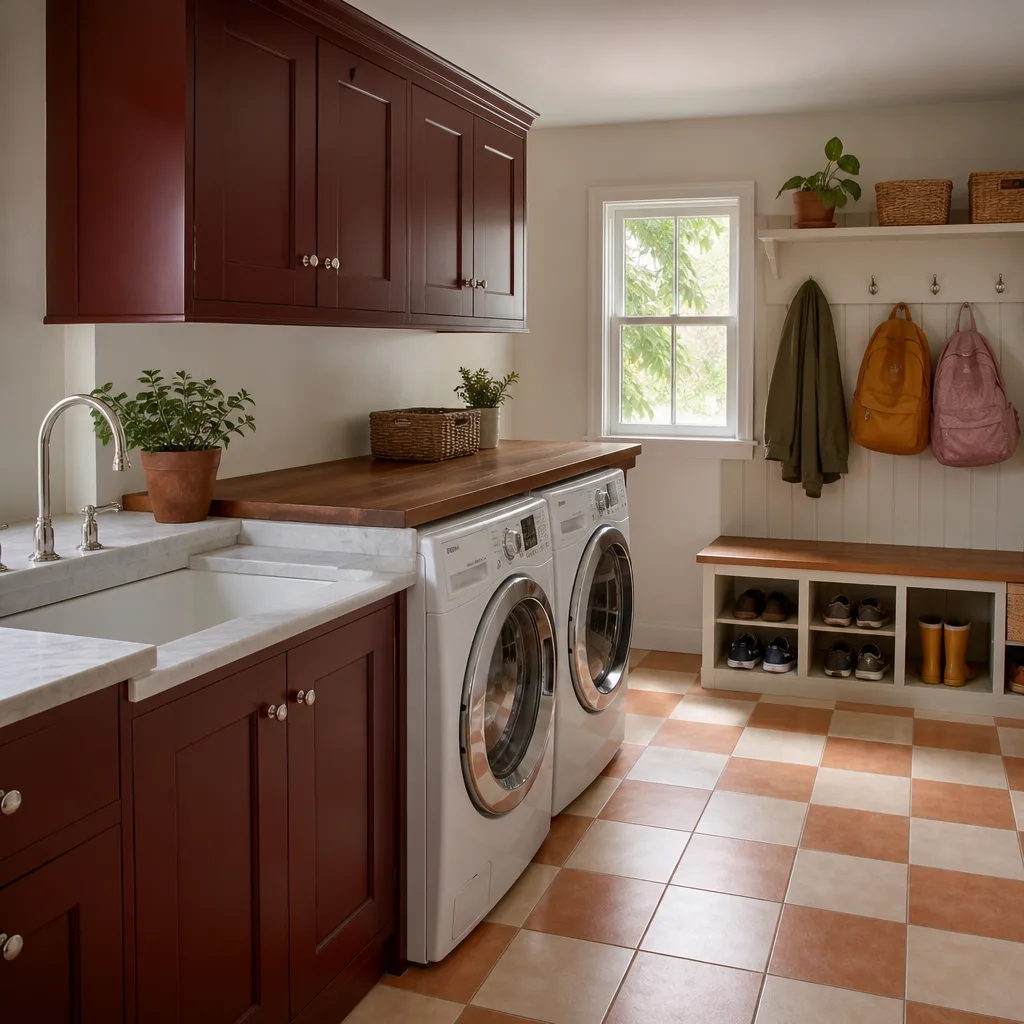
A kitchen remodel in Fort Lauderdale typically runs $18,000 to $55,000, with the final number determined by cabinet line, countertop material, layout changes, and whether plumbing or electrical work is required. Kitchen remodels in canal-front or historic homes cost more because the existing systems are older and the permitting is stricter. Call (754) 551-2922 for an exact quote, and you’ll get a written number, not a range.
Yes, if the bathroom remodel involves moving plumbing, changing the layout, or altering any wall, you need a permit from the City of Fort Lauderdale Building Services Department or Broward County depending on your jurisdiction. A cosmetic update like replacing a vanity and fixture in the same location may not require one, but any work behind the walls falls under permit requirements. We handle permit paperwork as part of every Fort Lauderdale bathroom remodel, so you don’t have to guess.
Miami-Dade product approvals matter in Fort Lauderdale because much of the city sits in the High Velocity Hurricane Zone, where the Florida Building Code requires windows, doors, and exterior products to meet Miami-Dade testing standards for wind and impact resistance. Your insurance carrier also checks for these approvals, and missing paperwork can mean denied wind mitigation credits and higher premiums. Always verify the product approval document before ordering.
Not if you hired a contractor who puts the price in writing before work starts. At Penhallow Remodeling, the number on your written estimate is the number on your invoice unless you change the scope, and any change is priced and approved in writing before the work changes. That’s the Kingswell standard we’ve operated under since 2004. Call (754) 551-2922 to get a written price for your Fort Lauderdale remodel.
Salt air in Fort Lauderdale corrodes unprotected metal fasteners, hardware, and fixtures years faster than inland Florida, especially within a mile of the Intracoastal or any canal. The fix is specifying marine-grade materials: 316 stainless fasteners, coated aluminum or impact-rated window frames, and fixtures with corrosion-resistant finishes from brands like Kohler and Moen. A contractor who understands the Fort Lauderdale corrosion hierarchy will spec these materials from day one.
A kitchen remodel in Fort Lauderdale typically takes 6 to 10 weeks from permit approval to final inspection, and a bathroom remodel runs 3 to 6 weeks, with the biggest variable being material lead times and permitting jurisdiction speed. Impact window replacement is faster, usually 1 to 2 weeks depending on the number of openings. We schedule crews in the window we give you, and the team that shows up is background-checked and in uniform. Call (754) 551-2922 for a timeline tailored to your project.
The Bottom Line
Construction in Fort Lauderdale is different from construction in generic South Florida, and the homeowners who understand that avoid the expensive mistakes. Know your flood zone, verify your product approvals, specify materials that survive salt air, and insist on a written price and a written guarantee before any work begins. Those four habits solve the majority of problems we see in this market. We’re Penhallow Remodeling Fort Lauderdale, we’ve been operating under The Kingswell Way since 2004, and every project includes a written price, a defined arrival window, and the 365-Day Done Right Promise in writing. Call (754) 551-2922 to schedule your free estimate, and you’ll get a real number before a single cabinet is pulled.
Written by Trevor Nash, Owner at Penhallow Remodeling Fort Lauderdale, serving Fort Lauderdale since 2004.


