

Last updated October 15, 2026







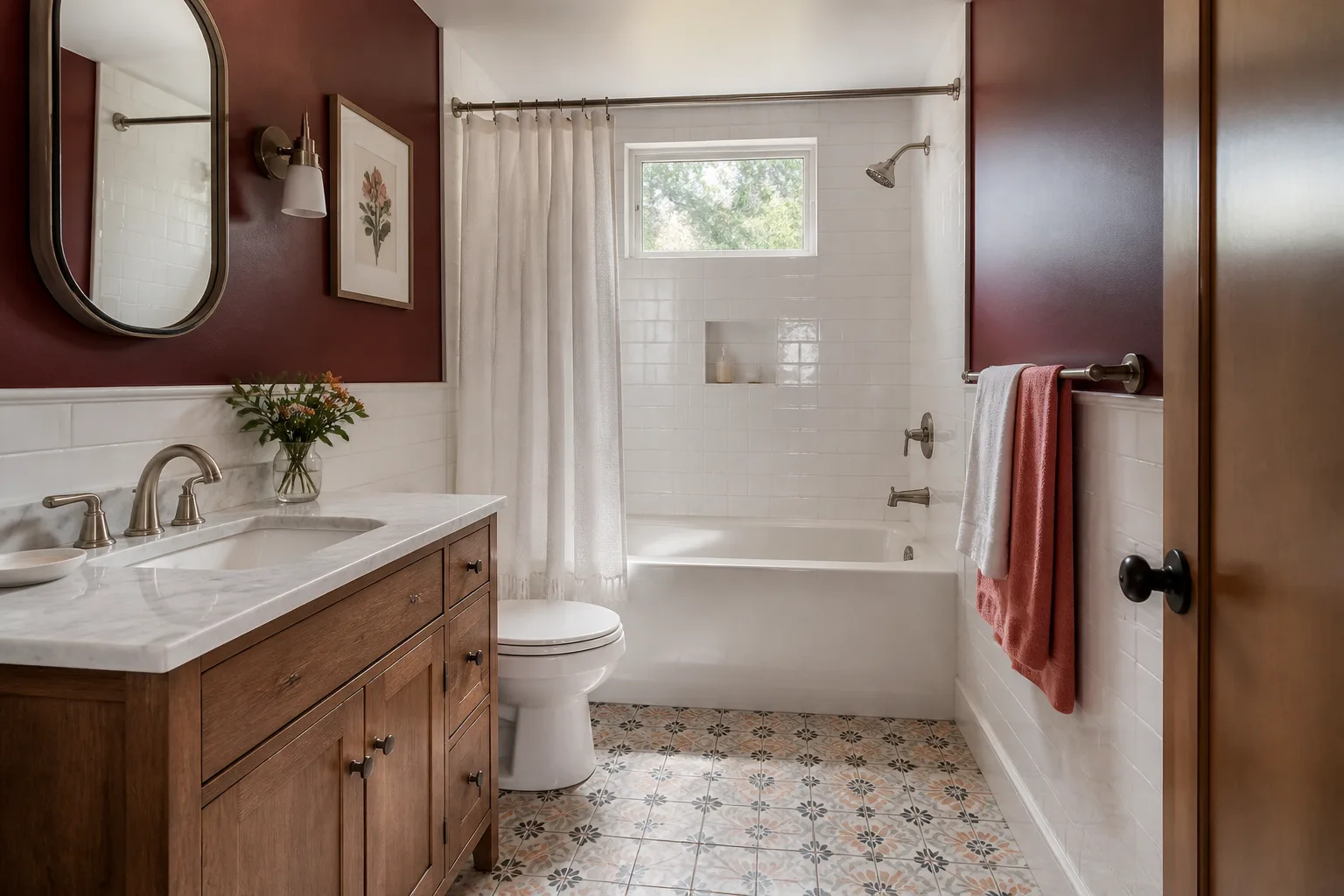
Free written scope consultation - allowances, timeline, and change-order rules on paper before a single trade is scheduled
How to Hire a Construction Contractor in Fort Lauderdale: A Step-by-Step Guide
Florida’s contractor licensing database is public, searchable, and takes about 30 seconds to check. Yet the most common remodeling dispute in Fort Lauderdale isn’t an unlicensed contractor vanishing mid-project. It’s a licensed contractor whose verbal estimate at the kitchen table bore zero resemblance to the invoice that arrived after the drywall went up. This guide walks you through the exact steps to hire a contractor in Fort Lauderdale who will put a written price and a written guarantee in front of you before a single cabinet gets pulled. If you’ve been burned before, this is written for you.
Styles & brands we work with







Quick Answer
To hire a construction contractor in Fort Lauderdale, verify their Florida DBPR license status (look for active, not probation), confirm they carry both general liability and workers’ compensation insurance, and insist on a written price before any work starts. Any contractor who won’t put the number, the arrival window, and the workmanship guarantee in writing is not someone you want opening up your walls. The four clauses that make a written estimate binding are: scope of work, fixed price, payment schedule tied to milestones, and a written guarantee with a defined remedy if something fails.
Table of Contents
- Step 1: Verify the Florida Contractor License Through DBPR
- Step 2: Read the Certificate of Insurance Like an Adjuster
- Step 3: The Written Estimate Test: What Actually Binds a Contractor
- Step 4: The Four Clauses That Turn an Estimate Into a Contract
- Step 5: How to Read a Fort Lauderdale Bid Line by Line
- Step 6: The Arrival Window: What “We’ll Be There in the Morning” Really Means
- Step 7: Evaluating a Workmanship Guarantee That Actually Holds Up
- Common Mistakes to Avoid
- When to Call a Professional
- Frequently Asked Questions
- The Bottom Line
Step 1: Verify the Florida Contractor License Through DBPR
Florida’s Department of Business and Professional Regulation, the DBPR, maintains a public database of every licensed contractor in the state. You can look up any contractor by name, license number, or business name at myfloridalicense.com. This is the first screen every Fort Lauderdale homeowner should run before answering a single question about scope or timeline.
Here’s what to look for and why it matters:
- License status: Active. Active means the contractor is current on continuing education, insurance filing, and renewal fees. That’s the baseline. Anything else is a red flag.
- Probation status. A contractor on probation in the DBPR database has had a disciplinary action filed against them by the Florida Construction Industry Licensing Board. Probation doesn’t mean they can’t work. It means a complaint was serious enough that the state attached conditions to their license. You want to know what those conditions are before you sign anything.
- License category. Florida separates general contractors (CGC), building contractors (CBC), and residential contractors (CRC). A general contractor can manage a whole-home remodel in Fort Lauderdale, including structural work and subcontracted trades. Make sure the category matches the scope of what you’re hiring them to do.
- Qualifier name. The license belongs to a qualifying individual, not always the person who shows up at your door. If the licensed qualifier is someone other than the person selling you the job, ask who actually supervises the work.
If you’d rather not run this yourself, any reputable contractor should offer their license number unprompted. At Penhallow Remodeling Fort Lauderdale, we’re a general contractor, and Trevor Nash will give you the license number before you ask. But run the check anyway. A contractor who flinches when you say “DBPR” has told you something important.
Step 2: Read the Certificate of Insurance Like an Adjuster
A Certificate of Insurance, the COI, is a one-page document that proves a contractor carries insurance. Most homeowners glance at it. Then they discover after an accident that the certificate listed coverage that had already lapsed, or the wrong type entirely.
Here’s what a COI must actually list, as two separate line items:
- General liability insurance. This covers property damage and bodily injury caused by the contractor’s work. For a Fort Lauderdale remodeling job, you want to see at least $1 million per occurrence. If a worker drops a Cambria quartz slab through your floor, this is the coverage that responds.
- Workers’ compensation insurance. This covers injuries to the contractor’s own employees. It must be listed separately. Many small operations carry general liability but skip workers’ comp to save on premiums. If an uninsured worker gets hurt on your property, you can be drawn into the claim as the property owner. In Florida, construction is one of the few industries where workers’ comp is mandatory for any business with employees.
Also check the certificate holder box. Make sure your name and property address are listed. And call the insurance agency listed on the COI to verify the policy is still in force. It takes five minutes. We’ve seen homeowners in Fort Lauderdale’s Victoria Park and Rio Vista neighborhoods discover, after the fact, that a policy was cancelled for nonpayment weeks before demo day.
Step 3: The Written Estimate Test: What Actually Binds a Contractor
Here’s the core problem in Fort Lauderdale’s current remodeling market: a verbal estimate is legally whatever the contractor says it was when the invoice shows up. Florida contract law requires a written agreement for construction work over $500 to be enforceable. But enforceability cuts both ways. If the scope is vague, the contractor has room to reinterpret it. If the price is a range, the only enforceable number is the top of the range.
A binding written price looks like this:
- A single dollar amount, not a range.
- A defined scope: which rooms, which surfaces, which materials, which fixtures.
- A payment schedule tied to completed milestones, not calendar days.
- A start date and a defined arrival window.
- A written guarantee with a specific duration and a specific remedy.
A “quote” that protects only the contractor looks like this:
- “Estimate subject to change based on site conditions.”
- “Allowance” for every major material, which lets the final price float with the market.
- No specification of brand, model, or grade for cabinets, counters, or fixtures.
- Payment by calendar percentage (e.g., 50% at week two) with no tied milestone.
In our experience doing kitchen remodeling in Fort Lauderdale, the difference between a written price that protects you and a quote that protects the contractor comes down to four clauses. Here they are.
Step 4: The Four Clauses That Turn an Estimate Into a Contract
These four clauses are the structural supports of any remodeling contract. If any one of them is missing or vague, the rest of the document is decorative.
- Scope of work, written in plain English. The scope should say exactly what gets demolished, what gets installed, and what gets left alone. “Remodel master bathroom” is not a scope. “Demo existing vanity, toilet, and shower pan; install new 60-inch double vanity, Kohler high-efficiency toilet, and tiled walk-in shower with cement board substrate (the moisture-resistant layer behind your tile) and glass enclosure” is a scope. The difference is the difference between a fixed price and a moving target.
- Fixed price, with line-item detail. The price should be broken into categories: demolition, plumbing, electrical, drywall, tile, cabinetry, countertops, fixtures, permits. If the contractor hands you a single number with no breakdown, ask for one. A line-item bid is easier to compare across contractors and easier to hold someone to when the invoice arrives.
- Payment schedule tied to milestones. A common Fort Lauderdale mistake is paying 50% up front and 50% at completion, with no definition of “completion.” Tie every payment to a visible milestone: “25% at contract signing, 25% at rough-in inspection passed, 40% at cabinet and countertop installation, 10% at final walkthrough and punch list resolution.” If the contractor balks at milestone payments, that’s information.
- Written guarantee with a defined remedy. A “1-year guarantee” that isn’t in writing is a handshake. A written guarantee says what’s covered, for how long, and what happens if something fails. That last part is the part most contractors leave out. See Step 7 below.
These four clauses are the difference between a contractor who intends to stand behind the work and one who intends to negotiate the invoice later.
Step 5: How to Read a Fort Lauderdale Bid Line by Line
Fort Lauderdale’s labor market is tight. Skilled crews are booked out, material costs shift quarterly, and the result is a wide spread in bids for the same scope. Our Construction Cost Breakdown: The Fort Lauderdale Homeowner’s Reference for 2026 explains what drives those differences. A homeowner in Coral Ridge or Imperial Point getting three bids for a bathroom remodel might see $14,000, $22,000, and $31,000 for what looks like the same job. It isn’t the same job.
The lowest bid is almost always a materials or scope cut wearing a trench coat. Here’s where the cut lives, line by line:
- Cabinetry grade. Plywood boxes versus particleboard. Soft-close hinges versus standard. Dovetail drawer construction versus stapled. A KraftMaid or Wellborn cabinet line carries a different price than an imported stock box. If the bid doesn’t name the cabinet brand and construction, assume the lowest available.
- Countertop material and thickness. Cambria and Silestone quartz carry their own manufacturer warranties and are priced accordingly. A generic “quartz” line with no brand name usually means a 2cm slab from an import yard with no warranty backing. That’s not automatically bad, but you should know that’s what you’re buying.
- Plumbing fixtures. A Kohler or Moen fixture costs more than a generic and lasts longer. If the bid says “fixtures by owner” or “standard grade,” you’re getting the bottom of the box at a faucet supply house.
- Waterproofing method. This is the one that bites hardest in South Florida’s humidity. A proper tile shower uses a waterproof membrane, sealed seams, and cement board substrate. A cheap bid often skips the membrane or uses drywall with a coat of “water-resistant” paint. Six weeks after the first shower, the grout cracks and the studs behind it swell. In Fort Lauderdale’s climate, this is not theoretical.
- Permit line item. If there’s no permit line, the contractor doesn’t intend to pull permits. Fort Lauderdale requires permits for any work that alters structure, plumbing, or electrical. Unpermitted work can complicate your home sale and your homeowner’s insurance. It’s also illegal.
- Disposal and dumpster fees. A low bid sometimes “forgets” the dumpster, the debris haul, or the disposal fees at the Broward County transfer station. You’ll find them added to the invoice later.
When you get three bids, lay them side by side and compare the line items, not the bottom lines. The bid that looks higher on day one often ends up being the honest number. The other two were guesses that will be corrected after the walls are open. At Penhallow Remodeling’s Fort Lauderdale home remodeling team, every bid is a written, line-item price before any work starts. The number on day one is the number on the invoice.
Step 6: The Arrival Window: What “We’ll Be There in the Morning” Really Means
“We’ll be there in the morning” translates to: we might be there at 7 a.m., we might be there at noon, and if we don’t show, you’ll leave a voicemail and wait for a callback. That’s not an arrival window. That’s an intention.
A real arrival window in a contract looks like this: “Crew arrives Tuesday, March 14, between 8:00 a.m. and 10:00 a.m.” It’s specific. It’s written. And it has a consequence if missed: the company owes you a call with a new window before the old window closes.
Why this matters for permitted work in Fort Lauderdale: inspections are scheduled in windows, not at exact times. The city’s building department schedules a 4-hour window for a rough-in inspection. If your contractor misses the window, you wait another week for the next available slot. Every missed window pushes your completion date back. A contractor who can’t commit to an arrival window for the first day of work is usually a contractor who can’t coordinate an inspection schedule either.
Ask every contractor this question: “What’s your arrival window, and what happens if you miss it?” If the answer is a shrug, keep looking. The Kingswell Way, which sets the standard for our work, is plain enough to repeat here: say the price before the work, show up in the window we gave, leave the place cleaner than we found it.
Step 7: Evaluating a Workmanship Guarantee That Actually Holds Up
Every contractor says they “stand behind their work.” The question is whether the guarantee is written, specific, and enforceable. A verbal “we’ll take care of you” is not a guarantee. It’s a courtesy, and it expires the moment the check clears.
Here’s the framework for evaluating any workmanship guarantee in Fort Lauderdale:
- Is it written? If the guarantee isn’t in the contract, it doesn’t exist. Insist on a written guarantee clause before any work starts.
- How long does it last? One year is the industry standard for workmanship. Some contractors offer 90 days, which barely covers the time it takes for a tile crack to show up in South Florida’s humidity cycles. Some, like Penhallow Remodeling’s bathroom remodels in Fort Lauderdale, back every job with a 365-Day Done Right Promise: if the work fails inside a year, we come back and fix it at no charge, with no re-inspection fee and no service call.
- What does it cover? A real guarantee covers the contractor’s workmanship: tile that cracks, cabinets that pull away from the wall, grout that fails, paint that peels. It does not cover normal wear, homeowner abuse, or manufacturer defects (those are covered by the manufacturer’s warranty, which is why we install Cambria quartz, which carries its own lifetime warranty alongside ours).
- What does “make it right” specify? This is the clause most guarantees skip. If the work fails, what exactly happens? Who pays for the materials? Who pays for the labor? Is there a service call fee? Does the contractor have a deadline to respond? A written guarantee should answer these questions. Ours says: free second visit, no service call fee, no re-inspection fee, repair at no charge. That’s what “make it right” needs to specify to be enforceable.
Common Mistakes to Avoid
- Taking the lowest bid without reading the line items. In Fort Lauderdale’s current labor market, the low bid is almost always a cut hiding in the cabinets, counters, or waterproofing. Compare line items, not bottom lines.
- Skipping the DBPR check because the contractor “seemed professional.” The database takes 30 seconds. A licensed contractor on probation is still licensed, and you want to know what they’re on probation for.
- Paying a large deposit before any work is scheduled. Florida law caps contractor deposits, and a 50% up-front payment for a remodel is a red flag. Tie payments to milestones.
- Signing a contract with an “allowance” for every major material. Allowances let the final price float. Get brand and model specs in writing.
- Accepting a verbal guarantee. If the guarantee isn’t in the contract, it doesn’t exist. Get it in writing, with the remedy spelled out.
- Hiring without checking insurance certificates. A COI that only lists general liability, with no workers’ comp, leaves you exposed if a worker gets hurt on your property.
- Ignoring the permit line. Unpermitted work in Fort Lauderdale complicates resale and insurance. If there’s no permit line in the bid, ask why.
When to Call a Professional
If the project touches plumbing, electrical, structural framing, or waterproofing, hire a licensed contractor and pull permits. Full stop. If you’re already at the point where you need a written bid, a DBPR check, and an insurance certificate, you’re past the handyman stage. A kitchen remodel in Fort Lauderdale isn’t a weekend project; it’s a permitted, inspected, multi-trade job. A bathroom remodel in a 1950s Coral Ridge ranch often means cast iron pipes, asbestos-era drywall, and framing that hasn’t seen daylight since Eisenhower was president. You want a contractor who has seen this before and has the license to back it up. Penhallow Remodeling Fort Lauderdale offers free estimates in Fort Lauderdale. Call (754) 551-2922 and we’ll put a written price in front of you before any work starts.
Frequently Asked Questions
Search the contractor by name or license number at myfloridalicense.com, the Florida DBPR’s public database. Look for a status of “Active,” check the license category matches your project type, and note whether the license is on probation. If the contractor won’t give you their license number, that’s your answer.
A written estimate that protects you includes a single fixed dollar amount, a defined scope of work in plain English, a payment schedule tied to completed milestones, a defined arrival window, and a written guarantee with a specific duration and remedy. Vague scopes and material “allowances” leave room for the price to float.
It must list general liability coverage (at least $1 million per occurrence) and workers’ compensation coverage as two separate line items. Your name and property address should appear as the certificate holder. Call the insurance agency to verify the policy is still active.
Because each bid is usually pricing a different job in disguise. The spread comes from cabinet construction quality, countertop brand and thickness, waterproofing method, plumbing fixture grade, and whether the permit and disposal fees are included. A low bid is typically a scope cut somewhere in those line items.
A real 365-day guarantee covers the contractor’s workmanship for a full year: tile that cracks, grout that fails, cabinets that pull away, paint that peels. It should specify the remedy in writing, including who pays for labor and materials and whether there’s any service call fee. Manufacturer defects fall under the manufacturer’s warranty separately.
Yes. Fort Lauderdale requires permits for any work that alters structure, plumbing, or electrical. A bid with no permit line means the contractor doesn’t intend to pull one. Unpermitted work can create problems with your home sale and your insurance. The permit also gets your work inspected, which is a second set of eyes on the contractor’s work.
The Bottom Line
Hiring a construction contractor in Fort Lauderdale comes down to one question: will every number, every deadline, and every guarantee be written down before the work starts? Our The Complete Guide to Construction in Fort Lauderdale covers the full process from planning to completion. Check the DBPR license, verify the insurance certificate, read the bid line by line, and insist on the four clauses that make a written estimate binding. The contractor who welcomes those steps is the one you want. The one who resists is the one you’ll be calling back in six weeks, when the grout cracks and the phone rings to voicemail.
Written by Trevor Nash, Owner at Penhallow Remodeling Fort Lauderdale, serving Fort Lauderdale since 2004.
Ready to get a written price before any work starts? Call Penhallow Remodeling Fort Lauderdale at (754) 551-2922 to schedule your free estimate.
See the difference
 Before
 After
After Before
 After
After Before
 After
After

